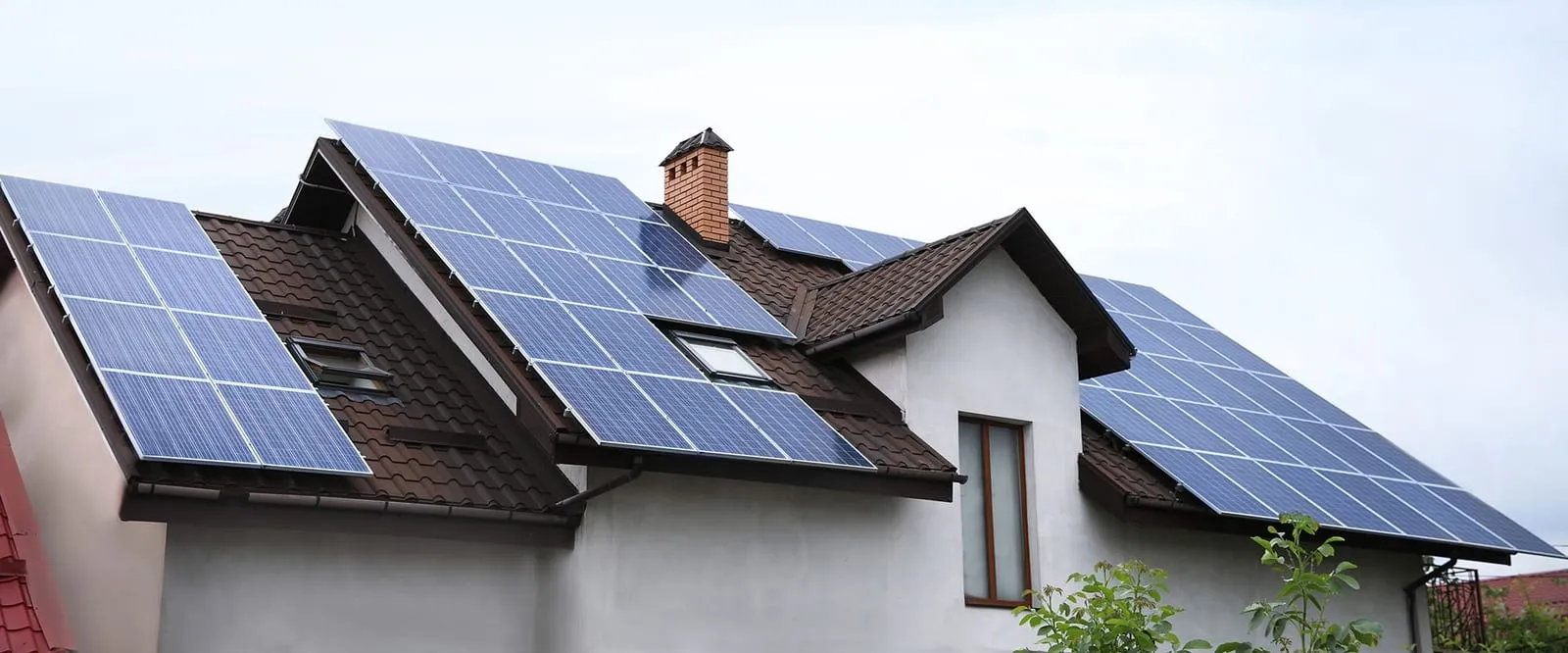
Stoke-on-Trent rarely appears on anyone’s shortlist of UK solar hotspots, but the underlying numbers say the trade should be paying closer attention. The city carries a population of 256,127, sits in a West Midlands irradiance band good for a typical yield of around 920 kWh per installed kWp a year, and — critically for procurement-minded installers — has a council that has put a formal net-zero date and a named climate framework on the record. Add a heritage industrial base with a genuine energy-cost problem and a cluster of named industrial estates with roof stock to fill, and stoke-on-trent commercial solar stops being a speculative search term and starts looking like a real, if under-served, pipeline. This is a trade read: what’s driving the demand, where the roofs actually are, and who’s positioned to take the work.
The policy backdrop: a 2050 target with real procurement teeth
Stoke-on-Trent City Council has set a net-zero target of 2050, formalised through the Stoke-on-Trent Climate Change Action Plan. That’s a longer runway than the 2030 pledges some combined authorities have adopted, and installers used to reading urgency into a council’s climate paperwork should recalibrate: this isn’t a city racing to decarbonise its own estate on an aggressive timetable. What it does provide is a standing framework that legitimises solar as part of routine planning and procurement conversations — pre-application energy statements, business-rates discussions, and the kind of institutional cover that makes a finance director’s sign-off easier. For commercial teams pitching into the city, the council’s climate plan is less a mandate and more a permission structure: it gives buyers language to justify a decision they were already leaning towards on cost grounds.
Where the council’s position gets more specific — and more useful for targeting — is its framing of industrial decarbonisation. The city’s stance is explicit that its heritage ceramics industry drives interest in industrial decarbonisation, which is a materially different sales conversation from a generic “green city” pitch. Ceramics manufacturing is energy-intensive by nature — kilns run hot, run long, and run on grid electricity or gas that has only got more expensive since 2022 — and that cost pressure, not abstract climate policy, is what’s pulling manufacturers towards rooftop generation and battery storage as a hedge against import prices. Any installer building a Stoke-on-Trent pitch deck should lead with the energy-cost story, not the net-zero one.
Etruria Valley and the enterprise zone effect
The second policy lever worth understanding is the Etruria Valley Enterprise Zone, which supports business expansion in the city. Enterprise zones typically bundle business-rate discounts and simplified planning with a push to attract new occupiers, and that combination matters for solar specifically: a business relocating or expanding into Etruria Valley is specifying a new energy strategy from a blank page, not retrofitting a decision made twenty years ago. That’s the easiest kind of commercial solar sale there is — capital planning that already includes a roof and a grid connection, before the asset even exists. Installers and EPC contractors who build a relationship with the enterprise zone’s incoming occupiers early, rather than waiting for a retrofit enquiry, get first sight of that pipeline. For manufacturers weighing up the maths on a new industrial unit, a dedicated resource like solar for businesses in Stoke-on-Trent is a natural point to send a prospect who wants the local numbers rather than a national brochure.
Where the roofs actually are: Festival Park, Trentham Lakes, Park Hall
Three estates carry the bulk of the city’s commercial and industrial roof pipeline: Festival Park, Trentham Lakes and Park Hall. Between them they cover the mix of retail, leisure, distribution and manufacturing floorspace that gives a commercial solar pipeline its shape — large flat roofs on retail and leisure units, mid-size industrial sheds with straightforward structural loading, and the kind of daytime-heavy energy demand that makes on-site generation pay back fastest. None of these estates is a household name outside the city, which is exactly the point: they’re the unglamorous, un-canvassed roof stock that gets missed by installers chasing headline-grabbing projects in Birmingham or Manchester, and they’re close enough together that a single regional team can service all three without the mobilisation costs of a scattered national campaign.
For a factory-focused pitch specifically — relevant given the ceramics context above — solarpanelsforfactories.co.uk is worth having in the toolkit, and for the units within these estates carrying genuinely industrial loads, solarpanelsforindustrialunits.co.uk covers the sizing and structural questions that come up early in a commercial conversation. Where car parking and canopy structures are part of the site — increasingly common on newer retail and leisure development at estates like Festival Park — solarcarparks.co.uk is the reference point for canopy-mounted arrays that add generation capacity without competing for roof space.
The direct route into the city’s commercial pipeline, though, is the dedicated local page: commercial solar panels Stoke-on-Trent is built specifically around this market and is the page worth pointing any Stoke-on-Trent commercial enquiry towards first.
The numbers, at a glance
| Data point | Detail |
|---|---|
| Council | Stoke-on-Trent City Council |
| Net-zero target | 2050 |
| Governing framework | Stoke-on-Trent Climate Change Action Plan |
| Council stance | Heritage ceramics industry drives interest in industrial decarbonisation |
| Enterprise zone | Etruria Valley Enterprise Zone (supports business expansion) |
| Key industrial estates | Festival Park, Trentham Lakes, Park Hall |
| Avg. commercial energy spend | ~£38,000/yr |
| Avg. house price | ~£165,000 |
| Region | West Midlands |
| Typical solar yield | ~920 kWh/kWp/yr |
| Population | 256,127 |
The economics: what’s actually driving the payback case
An average commercial energy spend of around £38,000 a year is the figure that matters most to a Stoke-on-Trent finance director weighing up a solar quote — it’s the number a system has to chip away at, and at a West Midlands yield of roughly 920 kWh per kWp annually, a well-specified commercial array can realistically offset a meaningful share of daytime consumption for a business running standard working hours. Against a typical commercial installed cost benchmark of roughly £900–£1,200 per kWp, and import electricity sitting around the mid-20s in pence per kWh under current Ofgem-linked commercial tariffs, the payback maths for daytime-heavy users — ceramics kilns, cold storage, distribution operations — tends to stack up faster than for a business with a flatter, more evening-weighted load. That’s a useful qualifying question for any installer working the estates: what’s the shift pattern, and does demand actually sit where the sun is.
Two policy details are worth getting right when quoting into this market, because they trip up installers who copy residential messaging straight into a commercial pitch. First, the 0% VAT relief on solar and battery storage runs until 31 March 2027, but it applies to residential installations — commercial systems are generally standard-rated, so that’s not a line to lead with on a factory quote. Second, any export arrangement depends on Smart Export Guarantee rates that vary by supplier — commonly quoted up to somewhere in the 12–20p/kWh range at the top end — and requires MCS certification to qualify at all, so that certification status is worth confirming with any subcontractor before a tender goes out.
Worth noting for context: with average house prices around £165,000, Stoke-on-Trent sits well below the regional and national average, which matters for domestic solar affordability messaging but has limited bearing on commercial deals — commercial procurement runs on operating-cost maths, not property values, which is precisely why the £38,000 energy-spend figure, not the housing market, is the number to build a Stoke-on-Trent B2B pitch around. For installers who want the fuller cost breakdown to back that pitch with hard figures, thecostofsolar.co.uk’s commercial cost guide is a solid reference to send alongside a quote.
Where capital budgets are tighter than the payback case deserves — a common story for mid-size manufacturers reluctant to divert cash from plant and machinery — a PPA or asset-finance structure can move a deal forward without a large upfront outlay. Solar power purchase agreements and dedicated solar asset finance routes are both increasingly normal parts of a commercial solar conversation in 2026, and for larger sites, pairing generation with commercial battery storage lets a ceramics operator shift kiln-running schedules towards self-generated power rather than importing at peak commercial rates.
The installer landscape
Stoke-on-Trent sits within reach of West Midlands-based commercial capacity rather than having a deep bench of its own specialist installers, which is part of why the city’s commercial pipeline is still under-served relative to its industrial base. Midland Solar is the closest regional specialist with the commercial track record to take on estate-scale work across Festival Park, Trentham Lakes and Park Hall, and is a natural first call for any operator in the city sourcing quotes. As the installed base across these estates grows, ongoing performance and maintenance become the next gap to fill — inverter faults and yield degradation on commercial arrays go unnoticed for longer than on a monitored domestic system, and a specialist O&M contract from an operator like Solar Maintenance Solutions is worth building into any commercial specification from day one rather than treating maintenance as an afterthought. The British Solar Blog’s maintenance guide is a useful primer for operators asking what a proper maintenance regime should actually include before they sign a contract.
What this means for the trade in 2026
None of this makes Stoke-on-Trent a gold-rush market — the 2050 target is unhurried, and the city isn’t running a grant scheme or a solar mandate that forces anyone’s hand. What it does have is a genuine cost driver in its ceramics base, a defined and reachable roof pipeline across three named estates, an enterprise zone actively bringing in new occupiers who are specifying energy strategy from scratch, and a regional yield that makes the underlying maths work. That combination — real economic pressure plus a legible pipeline plus thin existing installer coverage — is precisely the profile worth moving on before the market catches up with itself. It’s also arriving against a strong national backdrop: 2025 was a record year for UK solar, with 257,397 MCS-certified installations completed, up 32% on the year before, pushing total deployed capacity to around 21.6 GW. For a fuller picture of that national momentum and what it means for installer capacity planning, see Solar Weekly’s 2026 industry overview; for installers weighing up how to actually reach underserved markets like this one, our guide to installer marketing covers the practical side of building local visibility in a city that isn’t yet crowded with competing bids.
Stoke-on-Trent’s commercial solar story is a policy-and-pipeline read, not a subsidy story — and that’s arguably the more durable kind. It rewards installers who understand the local economics well enough to lead with energy cost rather than climate messaging, and who get into Etruria Valley and the three named estates before the rest of the West Midlands trade notices the gap.