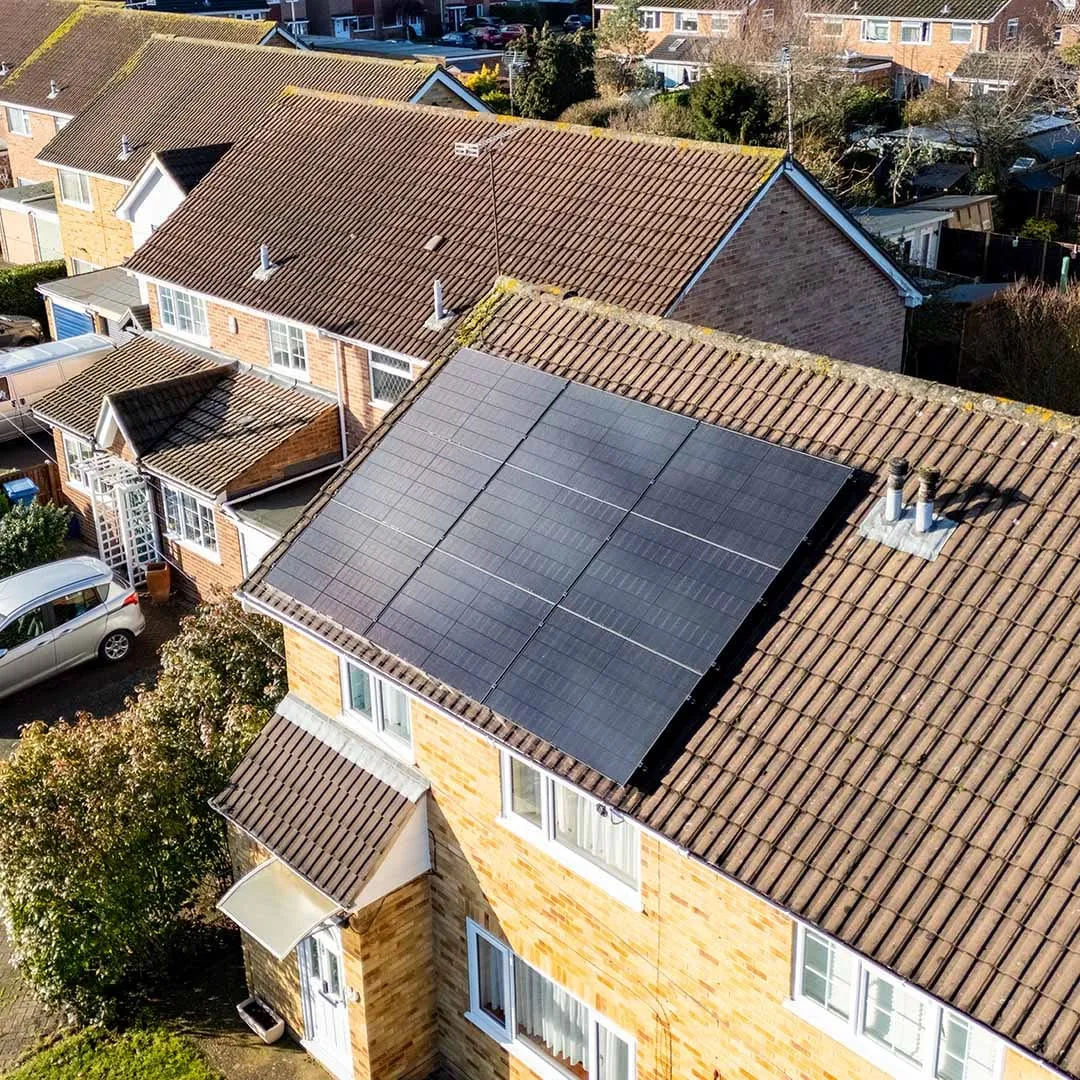
Cambridge doesn’t fit the usual commercial solar profile. It has no heavy industry to speak of, a tight green belt, and some of the most expensive commercial land in the country — yet it’s quietly become one of the more interesting UK markets for installers and asset investors to watch. The reason is baseload: a city built on life sciences and deep tech runs its buildings hard, 24 hours a day, and that changes the economics of every roof in a way that flat-roofed distribution sheds and single-shift factories can’t match.
A council with a 2030 deadline and a captive commercial base
Cambridge City Council has committed to a net-zero target for the city by 2030, set out in the Net Zero Cambridge Action Plan. That’s five years tighter than the national 2050 baseline, and it puts direct pressure on the council’s own estate, its planning policy, and — increasingly — on the commercial occupiers who lease space across the city’s science parks. Procurement teams inside life sciences and tech tenants are being asked by their own boards to show a decarbonisation pathway, and on-site generation is the fastest lever available that doesn’t touch process or lab equipment.
The Cambridgeshire and Peterborough Combined Authority (CPCA) sits above the city-level target, coordinating investment and infrastructure priorities across the wider sub-region — relevant to any installer or developer looking at a pipeline that extends beyond the city boundary into the surrounding business parks along the A14 and A10 corridors. For trade readers, the practical takeaway is that Cambridge’s net-zero commitment isn’t just a comms exercise: it’s a demand signal sitting on top of an occupier base that already has the electricity bills to justify solar without subsidy.
Why the economics work harder here than elsewhere
Cambridge’s commercial energy profile is unusual. R&D-heavy tenants — wet labs, cleanrooms, server rooms, environmental chambers — run continuous loads that a typical office or warehouse doesn’t. Average commercial energy spend across the city sits around £50,000 a year, and a meaningful share of that consumption happens outside the 9-to-5 window that usually limits solar self-consumption on commercial roofs. High, steady daytime and evening baseload means a much larger proportion of generated kWh gets used on-site rather than exported at a fraction of the import price — which is the single biggest driver of commercial solar payback.
Layer on regional solar yield: the East of England sees around 970 kWh per kWp per year, comfortably above the UK average of roughly 850 kWh/kWp and among the best yields in the country outside the far south coast. Combine strong yield with installed commercial costs currently running at roughly £900–£1,200 per kWp, an import price around 25p/kWh, and a Smart Export Guarantee that pays somewhere in the 12–20p/kWh range at the better end (SEG rates are set by individual suppliers, not fixed nationally, so it pays to shop the tariff), and self-consumption-heavy sites in Cambridge are landing well inside the payback windows that get finance committees to sign off.
There’s also a land-value angle that’s specific to this city. With average house prices around £510,000 and commercial land at a premium to match, ground-mount is rarely realistic within the urban core — which pushes the entire opportunity onto existing roof stock. That’s a market installers should read as a rooftop specialism, not a mixed rooftop-and-ground-mount pipeline.
For readers who want the underlying commercial-cost mechanics — kWp pricing, payback modelling, the effect of self-consumption ratios — thecostofsolar.co.uk’s commercial solar panel cost breakdown is the reference point we point installers to when quoting this kind of high-baseload site.
Where the roof pipeline actually sits
Three estates account for most of the addressable commercial roof stock feeding this pipeline:
- Cambridge Science Park — the original and largest cluster, dominated by mid-rise lab and office buildings with flat roofs built to load-bear plant equipment, which generally translates well to PV racking loads.
- Cambridge Research Park, on the northern edge of the city — a newer, lower-density park with larger single-let buildings, typically easier sites to survey and install on than the more constrained Science Park stock.
- St John’s Innovation Park — smaller-footprint, closer to the centre, home to a denser mix of early-stage and scale-up tenants who tend to move faster on decisions but have less capital to fund large capex out of pocket.
That capital-constraint point matters for how installers should be pitching. Early-stage tenants on innovation park sites are often better suited to a funded route — a power purchase agreement or asset-finance structure — than an outright capex purchase, whereas larger, established occupiers at the Science Park and Research Park are more likely to have the balance sheet for a straight purchase with a 5–8 year payback. Trade readers financing or brokering these deals will find the mechanics laid out on Solar Asset Finance and Solar Power Purchase Agreements, both of which are increasingly relevant to a market where landlords across multi-let science parks are weighing PPA structures against direct ownership. Commercial Solar Finance is worth a look too, for readers assessing which funding route suits a given occupancy and lease structure.
Given how many of these buildings are office and lab space rather than pure industrial sheds, the relevant vertical playbook is less “warehouse roof” and more office-building retrofit — Solar Panels for Office Buildings covers the specific constraints (rooftop plant congestion, structural surveys on older stock, phased installs around occupied floors) that come up repeatedly on Science Park and Innovation Park jobs. Where car parking is part of the site — common on the lower-density Research Park plots — canopy-mounted arrays are also worth scoping; Commercial Solar Canopy is the reference for that structural and planning route where roof space alone doesn’t cover demand.
The installer landscape and where the gaps sit
Cambridge doesn’t have a dominant local commercial-solar name in the way some regional cities do — the market is served by a mix of national commercial installers travelling in and regional East of England firms working the wider Anglia patch. That’s a gap worth flagging for trade readers: a life sciences cluster with £50k/yr average commercial energy spend and a hard 2030 council deadline is exactly the kind of demand base that rewards a firm building specific credibility in high-baseload lab and office retrofits, rather than treating it as generic commercial roofing work.
Green Hat Renewables in Cambridge is one of the operators actively building out a presence in the local area, and worth tracking as the market matures. On the wider hub side, solar for businesses in Cambridge and the dedicated commercial solar panels Cambridge page both give a useful read on how the city is being positioned to commercial buyers searching for installers right now — a signal worth checking periodically if you’re tracking competitive positioning in the East of England commercial market.
Regionally, the installers with the deepest East Anglia and Home Counties commercial footprint are the ones best placed to pick up Cambridge pipeline without a long mobilisation lead time. ECC Eco Energy operates the Essex and East Anglia commercial and battery-storage patch directly adjacent to Cambridgeshire, and Sola UK covers Hertfordshire and the wider Home Counties — both sit close enough to service Science Park and Research Park sites without the mobilisation costs a London or Midlands contractor would carry. Further north, Green Linc Renewables has MCS-certified capacity across Lincolnshire that overlaps with the CPCA’s wider sub-regional footprint, relevant to anyone tracking installer capacity across the whole combined-authority area rather than just the city itself.
MCS certification is the baseline qualifying point for any of this work — it’s the precondition for Smart Export Guarantee eligibility, and increasingly a procurement requirement in itself for institutional and life-sciences tenants running their own supplier due diligence. The scale of the underlying market is worth restating for trade context: 2025 was a record year nationally, with 257,397 MCS-certified installations (up 32% year-on-year) taking cumulative UK deployment to roughly 21.6 GW, or about 6.4% of UK electricity. Cambridge’s commercial segment is a small slice of that national total, but it’s disproportionately high-value per installation given the baseload and roof-stock profile described above.
Battery storage and the demand-charge angle
High, steady commercial loads are exactly the profile where battery storage adds the most value on top of a PV array — shifting self-generated daytime solar into evening peak-rate hours, and potentially trimming demand charges on larger connections. Battery Storage for Business is the relevant reference for occupiers weighing a combined PV-plus-storage system against solar alone, and it’s a conversation trade contacts should expect to have more of on Cambridge sites specifically, given how much of the local load sits outside standard daylight hours.
What this means for the trade
Cambridge is a market that rewards specialism over volume. The roof stock is concentrated in three named estates, the buyer base skews toward lab and office occupiers with genuine 24-hour loads, and the buying decision is increasingly shaped by a council-level 2030 deadline that’s filtering down into tenant-level procurement requirements. For installers, that argues for building credibility in office and lab retrofit work specifically — structural surveys around rooftop plant, phased installs around live labs — rather than trying to compete purely on price against generalist commercial contractors. For financiers and asset investors, the combination of strong East of England yield, high self-consumption from baseload tenants, and a growing appetite for PPA and asset-finance structures among capital-constrained scale-ups makes this a small but well-shaped pipeline worth tracking through 2026 and into the 2027 VAT-rate change that will start reshaping residential and small-commercial buying decisions across the wider region.
For a broader read on where UK commercial solar demand is heading this year, our own UK solar industry 2026 data round-up puts Cambridge’s pipeline in national context, and installers building a presence in university-city markets like this one may find our notes on installer marketing useful for positioning against the national contractors currently circling the same roofs.