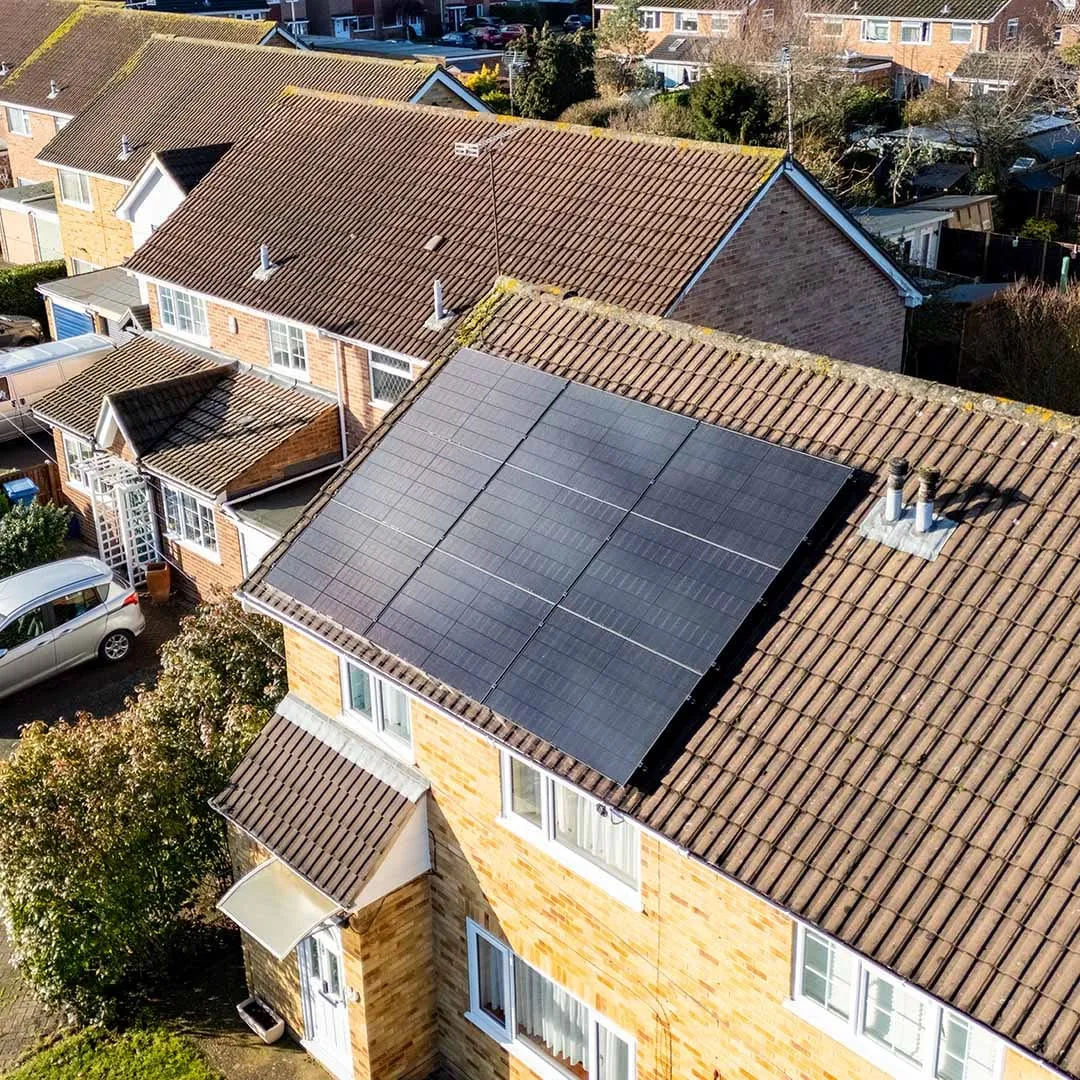
Schools are quietly becoming one of the steadiest sources of solar work in the UK, and most installers still aren’t set up to win the tenders. While the residential market chases 0% VAT deadlines and the commercial rooftop sector fights over warehouses and distribution sheds, local authorities and multi-academy trusts have been running consistent, funded procurement rounds for 30–50kWp school installations for the past three years — and the pipeline is getting bigger, not smaller. This is a trade-facing look at how that pipeline works, who funds it, and what it actually takes to get on a framework.
Why schools, and why now
Every English local authority has a statutory or self-imposed net-zero target, most commonly 2030 for council operations and 2040–2050 for the wider area. Schools are usually the single largest category of buildings on a council’s own estate — a mid-sized authority can be responsible for 60–150 school roofs — which makes them the easiest place to move the needle on scope 1 and 2 emissions without touching a single home. Academy trusts, which now run the majority of English secondary schools and a growing share of primaries, face similar pressure from the Department for Education’s own sustainability and climate change strategy, published in 2022, which set an ambition for the education estate to reach net zero by 2050 with a nearer-term ambition on operational emissions.
The practical effect is that solar has stopped being a one-off “green initiative” a headteacher pushes through and become a recurring capital programme item, often bundled with LED lighting, building fabric improvements and, increasingly, battery storage to manage the mismatch between term-time daytime generation and school-holiday demand.
Salix finance: the funding route every installer needs to understand
Most public sector solar in England is funded, in whole or in part, through Salix Finance — the government-owned body that administers interest-free loans and grants for public sector decarbonisation, funded via the Department for Energy Security and Net Zero and, for the schools-specific stream, in coordination with the DfE. The two schemes installers most commonly encounter are:
- Public Sector Decarbonisation Scheme (PSDS) — capital grant funding, allocated in phases (Phase 3 and 3b ran through 2021–2025, with further phases expected), aimed at low-carbon heating and energy efficiency, with solar PV frequently bundled in as part of a wider decarbonisation package rather than funded as a standalone measure.
- Salix-administered interest-free loans — historically used by councils and some trusts for standalone or smaller-scale renewable and efficiency projects, though direct loan availability has narrowed as grant-based decarbonisation funding has taken priority.
The detail that catches installers out is that Salix funding is awarded to the public body, not the installer. A council or trust applies, receives an allocation, then runs its own procurement to spend it — usually via a framework rather than open tender. That means the commercial relationship an installer needs isn’t with Salix at all; it’s with the local authority’s energy or estates team, or with the framework operator they use. Installers who wait for a school to advertise a standalone tender on Contracts Finder are consistently a step behind installers already listed on the relevant framework.
For a broader look at how commercial and public-sector solar finance now works across grants, loans and PPAs, commercialsolarfinance.co.uk is a useful reference point for installers building out proposals, and solarpanelgrantsforbusinesses.co.uk tracks the wider business and public-sector grant landscape that often sits alongside Salix funding on mixed-use sites.
Procurement routes: frameworks over open tender
Three procurement routes dominate the schools sector, and each has a different barrier to entry:
1. National and regional frameworks. Bodies such as Crown Commercial Service, Efficiency East Midlands (EEM), Procurement for Housing / LHC, and regional construction consortia run multi-supplier frameworks that councils and trusts call off against without running a fresh OJEU/PPN-compliant tender each time. Getting onto one of these is a significant undertaking — typically an annual or biennial application window, a PQQ-style submission covering financial standing, insurance, health and safety accreditation (CHAS, SMAS or similar), and reference projects — but once on, an installer is visible to every buyer using that framework for its duration, usually 2–4 years.
2. Direct council frameworks. Larger authorities, particularly county councils and combined authorities running their own PSDS-funded programmes, sometimes run their own mini-competitions among a shortlist of 3–6 pre-qualified installers. These tend to specify MCS certification as a baseline (essential for any installation that will claim Smart Export Guarantee income on surplus generation, and increasingly used as a quality proxy even where SEG isn’t the primary driver), plus specific experience with occupied-building installation — schools can’t simply close for six weeks, so out-of-hours and phased working plans matter more here than on a warehouse job.
3. Direct approach / RFQ for smaller trusts. Single academies and small multi-academy trusts without the scale to run a formal framework often go straight to RFQ, sometimes triggered by an energy audit or a governor with a sustainability brief. This is the most accessible route for installers without framework accreditation, but it’s also the most fragmented — no pipeline visibility, and win rates depend heavily on existing relationships with local estates managers or MATs’ finance directors.
The 30–50kWp sweet spot, and why it exists
Most school roof installations in the UK land in the 30–50kWp range, occasionally reaching 100kWp+ on larger secondary or sixth-form college sites with bigger roof footprints. There are three structural reasons this band is so consistent:
- Roof area and structural limits. A typical primary school roof, after allowing for plant, rooflights and shading, can usually accommodate somewhere in the 25–45kWp range on standard panels; secondary schools with larger sports halls or assembly blocks push toward the upper end.
- Demand profile mismatch. Schools have a strong daytime, term-time electricity demand — kitchens, IT suites, ventilation — which self-consumes solar generation well during term, but generation continues through the six-plus weeks a year the building is largely empty. This is why battery storage and, on some larger sites, EV charging for the school minibus or staff fleet are increasingly specified alongside the PV array, to capture value the grid export rate alone won’t cover. With export rates from most suppliers sitting well below retail import prices (SEG rates vary supplier to supplier, generally in a low-to-high teens pence-per-kWh range at the top end, against ~25p/kWh typical import costs), maximising self-consumption is the financial priority, not maximising export.
- Budget banding. A 30–50kWp commercial-scale system typically falls in a cost range that a single Salix-funded tranche or a council’s annual capital allocation can absorb without needing a multi-year phased approval, which keeps it the default spec size procurement teams reach for.
Installers scoping this work should expect commercial-rate costs — roughly £900–£1,200 per kWp installed is a reasonable planning range once scaffolding, distribution board upgrades and any asbestos survey work on older 1960s–1980s school stock are factored in, which is often where school jobs differ most sharply from a clean warehouse roof.
What buyers actually screen for
Speaking to installers who’ve won repeat school work, three things separate framework winners from single-job contractors:
- MCS certification, non-negotiable. Even where the funding route doesn’t strictly require it, MCS is now the default quality signal buyers use, and it’s required if the school intends to register for SEG income on any exported surplus.
- DBS-checked, occupied-site experience. Working on a live school site with children present requires a different site management approach to a commercial roof — enhanced DBS checks for site staff, strict delivery and noise windows, and often a requirement to work only in holiday periods for anything involving scaffolding over play areas.
- A genuine track record, not a portfolio of homes. Buyers on frameworks specifically ask for public-sector or education-sector reference sites. An installer with strong domestic and small commercial numbers but no education references will usually be screened out at PQQ stage regardless of price competitiveness.
Installers building this side of their business should look at how solarpanelsforschools.co.uk frames the sector-specific case for school solar — funding routes, roof suitability and the holiday-generation problem — and at solarpanelsforcolleges.co.uk, which covers the further education and sixth-form college segment where roof areas and budgets typically scale up beyond the primary/secondary norm. Both are useful pages to point a governor or MAT estates lead toward when building the business case internally.
Regional installers already active in this space
This isn’t purely a job for national contractors with framework scale. Regional MCS-certified installers are increasingly picking up direct-approach and smaller-framework schools work alongside their commercial and domestic pipeline. In Lincolnshire, greenlincrenewables.co.uk has built out commercial-scale MCS installation experience that translates directly to school-roof specifications; in South Yorkshire, electrifusionsolutions.com combines solar and electrical contracting in a way that suits the distribution-board and consumer-unit upgrade work school sites so often need alongside the array itself. For installers in Essex and East Anglia chasing county council or MAT frameworks, ececoenergy.com has a commercial-focused track record worth benchmarking against when putting together a PQQ reference list.
The near-term outlook
With 2025’s record MCS installation numbers (257,397 installs, up 32% year-on-year) largely driven by domestic 0% VAT demand, and that VAT relief scheduled to run until 31 March 2027, the domestic market has an obvious cliff-edge risk built into it. Public-sector and education work doesn’t carry that same deadline pressure — Salix-funded programmes and local authority net-zero targets run on multi-year budget cycles independent of VAT policy, which makes schools one of the more resilient commercial segments for installers looking to de-risk their pipeline over the next 18–24 months.
The barrier to entry is real — framework accreditation takes months, not weeks, and occupied-site working discipline isn’t optional — but for installers willing to put the PQQ paperwork in now, the schools sector offers something the domestic market increasingly can’t: multi-year, publicly funded, repeat-order visibility. For a wider view of how commercial procurement and pricing compares across sectors, commercialsolarpanelsinstallation.co.uk is a good starting benchmark, and our own breakdown of commercial solar panel costs sets out how 30–50kWp system pricing compares against smaller and larger commercial bands.
Get the accreditation and reference-site work done this year, and the schools pipeline is there for the taking through the rest of the decade.