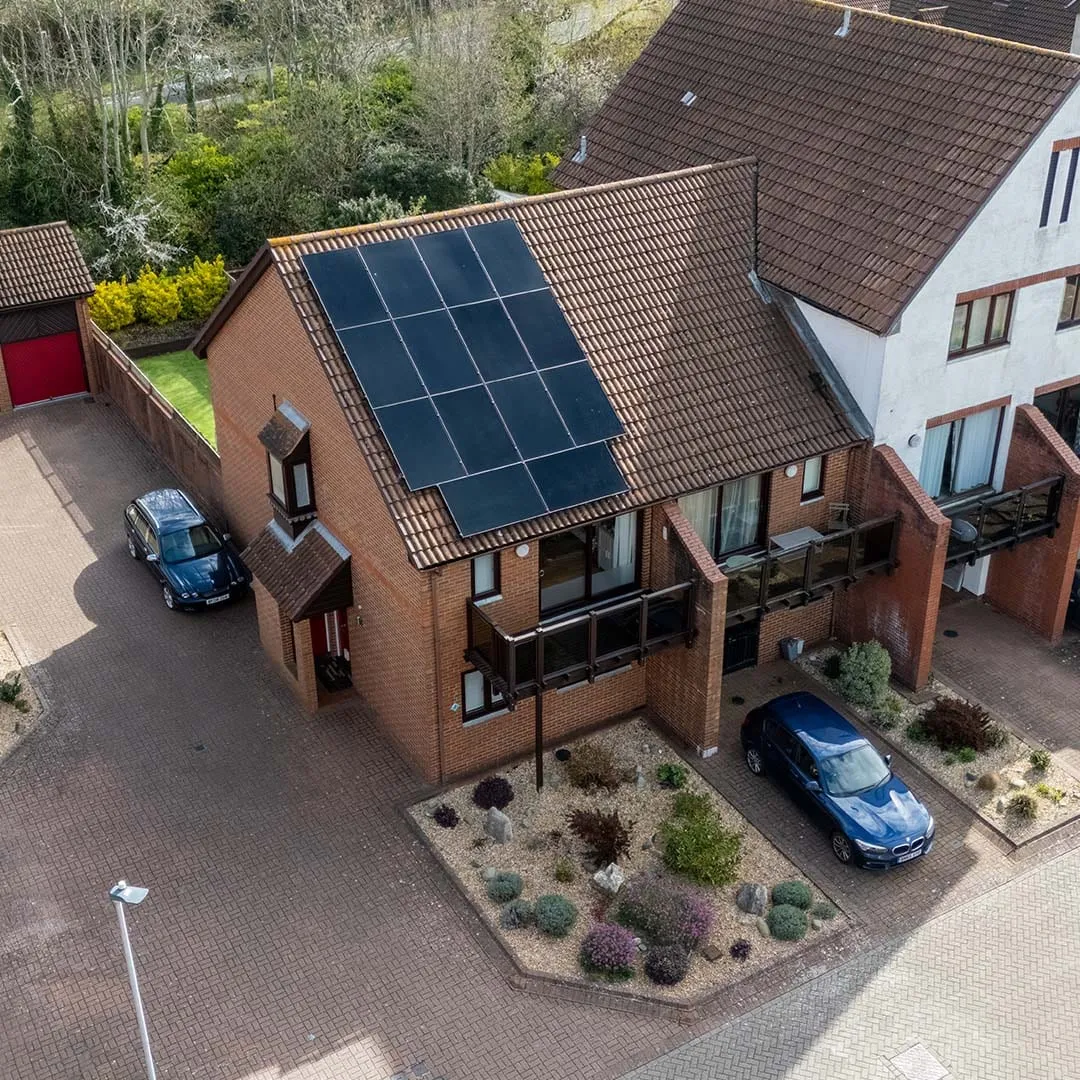
Councils and housing associations have quietly become one of the biggest procurement channels in UK solar. Not glamorous, not always well covered in trade press, but the volumes are real: retrofit programmes running across thousands of stock units, multi-year frameworks, and a funding architecture that’s shifted several times since 2020 without most installers ever fully mapping it. This is a look at how that pipeline actually works in 2026 — where the money comes from, what wins tenders, and why it’s a different discipline to residential or even standard commercial roofs.
From SHDF to the current funding landscape
The Social Housing Decarbonisation Fund (SHDF) was the headline scheme that got a lot of this activity moving from 2021 onwards — Wave 1, Wave 2.1, and the Wave 2 competitions ran registered providers and local authorities through EPC-band-driven retrofit, typically pushing stock from bands D/E/F up to C. Solar PV rarely sat alone in these bids; it was bundled with fabric-first measures (insulation, glazing) and often heat pumps or heating controls, because the funding logic was always “fix the fabric, then look at generation and low-carbon heat.”
That wave-based competition model has since folded into the wider Warm Homes: Social Housing Fund and the broader Warm Homes Plan funding envelope that superseded the old SHDF branding. The practical effect for installers bidding into this space: expect multi-measure retrofit packages, EPC-band uplift as the primary KPI, and PV treated as one line item in a bigger fabric-and-heat programme rather than a standalone solar contract. If you’re quoting a council retrofit tender assuming it’s “just install panels,” you’ve misread the brief — read the whole specification, because failure to hit the fabric or ventilation requirements can void the funding claim for the entire property, PV included.
There’s no single live “council solar panels scheme” that’s separate from this — it’s retrofit funding with PV as a component, plus separate routes like the Public Sector Decarbonisation Scheme (PSDS) for council-owned non-domestic buildings (offices, depots, leisure centres) rather than housing stock. Installers who conflate the domestic retrofit funding with PSDS commercial-estate funding lose credibility fast in a tender room — they are different pots, different KPIs, and often different procurement teams within the same council.
The fuel-poverty overlay
Nearly every council and RP retrofit programme layers fuel poverty targeting on top of the EPC-band mechanics. This isn’t incidental — it’s usually the political justification for the spend, and it shapes site selection. Tenants in fuel poverty (broadly, high energy costs relative to income, often in poorly insulated homes) get prioritised, which means:
- Site selection is data-driven from council/RP stock condition surveys, not “whichever roofs are easiest to scaffold.”
- Vulnerable-occupant considerations (elderly residents, medical equipment, young children) affect access windows and installation sequencing — you don’t get a free run of the estate in one continuous sweep.
- Tenant liaison and communication is a scored tender criterion, not an afterthought. Housing officers will ask installers directly how they handle occupied-property works, decant if needed, and complaints handling.
Independent resources like fuelpovertyhelp.co.uk are useful context here — not because they run the tenders, but because understanding what actually drives a household into fuel poverty (EPC band, heating system type, tenure, income) helps installers write a tender response that speaks the commissioner’s language rather than a generic sales pitch. Councils publish fuel poverty statistics by ward; a bid that references the specific stock condition data for that authority reads very differently to one that’s clearly a copy-paste template.
On the domestic side, it’s also worth separating this from the general grant landscape tenants might ask about. There is no universal home-solar grant for owner-occupiers in England — ECO4 and the Warm Homes schemes are means-tested and EPC-triggered, aimed at low-income households in poorly rated homes, and Scotland runs its own route through Home Energy Scotland interest-free loans. If a tenant or leaseholder on a mixed-tenure estate asks “can I get panels through the council,” the honest answer depends entirely on tenure and their own household’s eligibility — worth pointing enquirers toward a clear breakdown like councilhousegrants.co.uk rather than letting confusion fester between “the council is installing on RP-owned stock under a funded programme” and “there’s a general grant anyone can apply for.”
What procurement discipline actually looks like
This is where installers who’ve only worked residential retainers get caught out. Council and RP procurement runs on frameworks, not one-off jobs.
Framework structures. Most large RPs and councils procure via multi-year frameworks (often 3-4 years, sometimes with 1-2 year extension options) covering a defined volume of properties or a spend ceiling, awarded to a shortlist of 2-5 contractors who then compete for individual work packages or task orders as stock becomes available. Getting onto the framework is the hard part — a single missed tender can lock you out of a region’s public housing pipeline for years.
PAS 2035 and TrustMark. Any SHDF-descended or Warm Homes-funded retrofit work sits under the PAS 2035 whole-house retrofit standard, which mandates a Retrofit Coordinator overseeing the assessment, design, and installation, with the installer working to a Retrofit Assessment and Medium Term Improvement Plan rather than a standalone PV design. TrustMark registration is typically a hard gate for bidding at all — no TrustMark, no tender invitation, regardless of MCS status.
MCS still matters. MCS certification remains the baseline for the PV and battery installation itself (and is required if any export/SEG element applies to void properties or communal supplies), sitting alongside — not instead of — PAS 2035 and TrustMark. A contractor turning up to a framework interview with MCS but no PAS 2035/TrustMark pathway won’t get past the pre-qualification questionnaire.
KPIs that get measured. Expect scored contracts to track: EPC band uplift achieved vs. target, programme (properties completed per month against a schedule that rarely allows slippage), defect/callback rate, tenant satisfaction scores, and health and safety incident reporting. Payment is frequently milestone- or completion-linked rather than staged like a private commercial job, so cashflow planning across a framework matters more than it does on residential retainer work.
Voids vs. occupied stock. Void (empty) properties are far easier logistically — full access, no tenant liaison, no working-around-occupants — but voids are usually a minority of a stock condition programme. The bulk of volume work is occupied-property retrofit, which is where the tenant communication scoring criteria above actually bite into programme delivery speed.
For installers weighing up whether this is worth the tender-writing overhead versus staying in private residential and commercial work, it’s worth benchmarking against typical domestic system costs — a 4kW residential install currently runs roughly £6,000-£8,000 fitted, which gives a sense of scale when a framework covers hundreds or thousands of similar-sized systems across a stock portfolio. thecostofsolar.co.uk’s residential cost breakdown is a useful reference point if you’re pricing framework rate cards against retail-equivalent costs, and solarweekly’s own installer marketing coverage touches on how contractors position themselves for larger institutional buyers rather than direct-to-consumer leads.
Commercial-estate work is a separate lane
Where a council is decarbonising its own operational estate — town halls, depots, schools, leisure centres — that’s Public Sector Decarbonisation Scheme territory or direct capital programme spend, not housing retrofit funding, and it behaves much more like standard commercial solar procurement: roof surveys, structural assessment, half-hourly meter data analysis, and a business case built on displaced grid consumption rather than EPC bands. Installers active in council housing retrofit sometimes assume the relationship carries over to the estates side; in practice it’s usually a completely different procurement team, different framework, different technical scope.
For that side of council work, sector-specific technical grounding is worth having ready: solarpanelsforschools.co.uk for the academy/school estate portion many councils and MATs run in parallel, and solarpanelsforcommercialproperty.co.uk for landlord-side considerations when a council is acting as landlord across mixed commercial units. Neither replaces a proper PSDS or capital-programme bid response, but both are useful for calibrating what “good” looks like on roof condition, structural loading, and payback framing when the audience is a facilities or estates manager rather than a housing officer.
Regional delivery examples worth knowing
Framework and stock-condition programmes are inherently regional — a contractor’s track record in one authority rarely transfers automatically to another without local references. Installers building a public-sector track record are worth watching in their regions: Greenlinc Renewables in Lincolnshire and Ecoaim in Central Scotland both operate in areas with active council and RP stock programmes, while firms like Electrifusion Solutions in South Yorkshire sit close to authorities running multi-year retrofit frameworks off the back of Warm Homes funding. None of this is an endorsement of a specific tender outcome — track records in this space are built authority by authority, framework by framework, and a contractor’s residential retainer book tells you very little about whether they can deliver a 4,000-property occupied-stock programme to a PAS 2035 standard on schedule.
The practical takeaway
Council and social housing solar in 2026 is volume work with real rules attached: PAS 2035 retrofit coordination, TrustMark as a bidding gate, MCS as the PV baseline, EPC-band uplift as the funding trigger, and fuel poverty targeting as the political and site-selection logic underneath it all. It rewards contractors who can staff a Retrofit Coordinator relationship, handle occupied-property tenant liaison as a genuine operational discipline rather than a tender checkbox, and manage milestone-linked cashflow across multi-year frameworks — not contractors who are simply good at fitting panels quickly on empty roofs. Installers weighing whether to chase this pipeline should start by mapping which local authorities and RPs in their operating area have active Warm Homes-funded programmes, get TrustMark and PAS 2035 pathways sorted before a tender window opens, and treat the fuel-poverty and EPC-band data as the brief, not background reading.