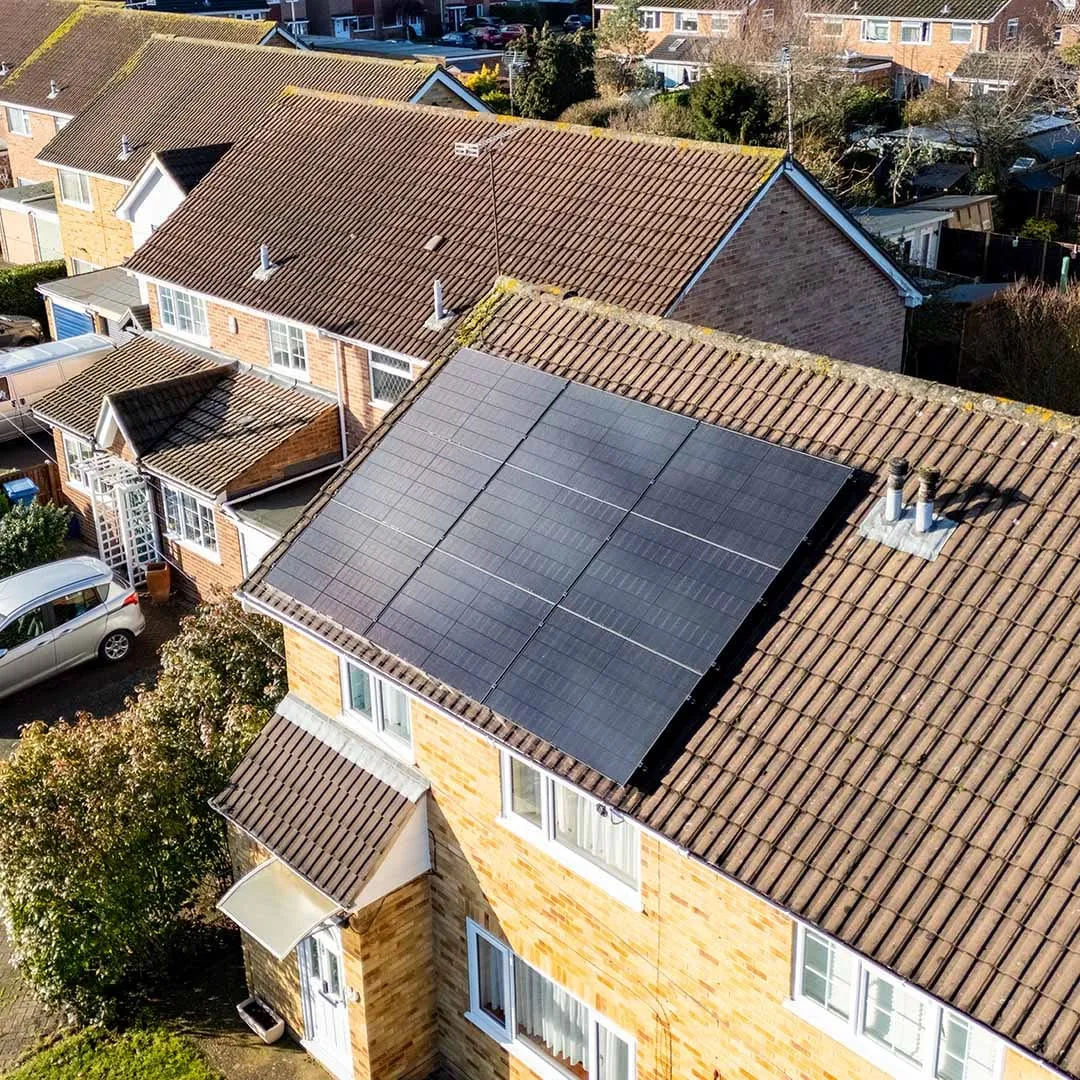
Liverpool City Council is under a firm deadline: net-zero across the city by 2030, a target set out in the Liverpool City Region Climate Action Plan and now backed by procurement muscle rather than just ambition. For installers and investors watching the North West, the interesting story isn’t the target itself — most core cities have one — it’s what’s converging behind it: a combined authority with an active innovation fund, a Freeport tax regime that makes commercial solar cheaper to depreciate, and three industrial estates with roof area that hasn’t been touched yet. This is a read on the policy and the pipeline, not a puff piece.
The policy backdrop: a 2030 target with money behind it
Liverpool’s net-zero commitment sits inside the wider Liverpool City Region Climate Action Plan, the framework the Liverpool City Region Combined Authority uses to coordinate carbon reduction across the six boroughs. What makes it more than a wall chart is the Combined Authority’s Net Zero Innovation Fund, which exists specifically to back low-carbon projects and infrastructure across the region — solar among them. For a city aiming to decarbonise in under four years from now, that’s a meaningfully short runway, and short runways tend to pull commercial procurement forward rather than let it drift.
The practical effect for installers: local authority and combined-authority-adjacent bodies are increasingly asking suppliers what they can deliver at pace, not just at spec. A 2030 target forces phased rollout plans rather than one-off pilot installs, and that’s a different kind of commercial conversation than most regional installers are used to having.
The Freeport angle — the bit trade readers actually need to know
Liverpool City Region holds Freeport status, and that status carries a real financial lever for commercial solar: buildings sitting within the designated Freeport tax sites can access Enhanced Capital Allowances, which let businesses write off qualifying plant and machinery investment — including rooftop solar — against tax at a faster rate than standard capital allowances permit. This sits alongside (not instead of) the general capital allowances regime already available to UK companies investing in solar as plant and machinery.
Two things worth being precise about here, because this is a trade audience. First, this is a commercial VAT and tax context — it has nothing to do with the 0% VAT relief on residential solar and battery storage, which runs in Great Britain until 31 March 2027 and applies to domestic installations only. Commercial installs remain standard-rated for VAT regardless of Freeport status; the benefit is on the capital allowance side, not the VAT side. Second, Enhanced Capital Allowances are geographically scoped to the tax sites themselves, so the practical selling point is location-specific — a system on a warehouse roof inside a Freeport tax site is a different commercial pitch to the same system three miles outside it. Any installer quoting into the Liverpool City Region should be checking site boundaries before pricing a proposal, not after.
Where the roof pipeline actually sits
Three industrial estates carry the bulk of the addressable commercial roof stock for this market:
Speke Industrial Estate — long-established, large-format industrial and logistics roofs close to the airport and Freeport infrastructure. This is the estate most likely to intersect with the Freeport tax-site boundary, which makes it the estate worth prioritising for capital-allowance-led sales conversations.
Aintree — a mixed industrial and distribution base on the city’s northern edge, with the kind of mid-size unit stock that tends to get overlooked by installers chasing single big-roof wins but that adds up fast in aggregate MW terms across a portfolio approach.
Knowsley Industrial Park — one of the larger concentrations of industrial floorspace in the wider city region, sitting just outside the Liverpool boundary but firmly inside the Liverpool City Region Combined Authority’s remit and therefore inside the same net-zero and innovation-fund framework.
None of this is small-commercial territory. A typical business on one of these estates is looking at something closer to £40,000 a year in energy spend than the sub-£10,000 figures more common on the high street — and at that spend level, the payback maths on rooftop solar starts to work hard. Using current national commercial installation pricing (roughly £900–£1,200 per kWp installed) and the North West’s typical solar yield of around 870 kWh per kWp per year — a shade below the sunnier south but entirely workable for a roof-mounted commercial array — a 50 kWp system installed for somewhere around £45,000–£60,000 would generate in the region of 43,000 kWh annually. Against an assumed import rate near 25p/kWh, that’s a meaningful offset against a £40,000 annual bill before any Smart Export Guarantee income from surplus generation is even counted, and SEG rates vary by supplier so any pitch should be quoted on the client’s actual contracted rate rather than a headline figure. It’s an illustrative sum, not a quote, but it’s the sum that gets a facilities director’s attention on an estate like Speke.
For the specifics of what’s on the ground in the city, commercial solar panels Liverpool is the closest thing to a local specification hub, and solar for businesses in Liverpool covers the wider business case for operators weighing up whether their site qualifies for the commercial economics above.
The installer landscape
Liverpool’s commercial solar market doesn’t yet have a dominant regional name the way some northern cities do — it’s split between generalist North West electrical contractors picking up solar as an add-on and a smaller number of specialists who’ve built a genuine commercial pipeline. That gap is worth watching: a city with a hard 2030 deadline, a Freeport incentive, and three sizeable industrial estates is exactly the kind of market where a specialist installer with a proper commercial proposition can take share quickly from generalists who are still quoting domestic-style jobs at commercial scale. A North West solar specialist covering the wider Liverpool–Manchester corridor is the kind of positioning that fits this gap.
It’s also worth looking at how comparable regional markets have scaled their commercial books, since the playbook tends to transfer even where the geography doesn’t. In the West Midlands, Midland Solar has built out a Birmingham-anchored commercial and domestic base that shows what a regional generalist-to-specialist transition looks like in practice. In Yorkshire, YEERS has taken a multi-technology approach — solar, battery, heat pump and EV — that maps reasonably well onto the kind of estate-wide decarbonisation brief a combined authority innovation fund is likely to favour over single-technology bids. Neither operates in Liverpool directly, but both are useful benchmarks for what a scaled regional commercial operation looks like once it moves past first-mover domestic work.
One gap that tends to get missed in fast-growing commercial pipelines: asset care once systems are live. A 50 kWp-plus rooftop array on an industrial estate is a 25-year-plus asset with a string inverter that will need replacing once inside that lifespan, and estates procuring at pace rarely build O&M into the initial contract. That’s the kind of work a dedicated operator like Solar Maintenance Solutions exists for, and it’s worth any installer quoting into Speke or Knowsley building a maintenance handover into the proposal rather than leaving it as an afterthought — estates procuring several systems in a short window are exactly where a servicing backlog builds up fastest.
Financing and the wider commercial case
The Enhanced Capital Allowance angle inside the Freeport tax sites is the standout local lever, but it sits within a broader UK commercial solar financing landscape that any installer pitching into Liverpool should have ready to hand: structured finance and asset-backed models for businesses that don’t want to fund installs from capital reserves, growing interest in power purchase agreements for larger estate operators who’d rather buy generated electricity than own the asset outright, and battery storage increasingly bundled into commercial quotes to capture more of the value from what’s generated on-site. Businesses on Speke or Knowsley weighing up funding routes have a genuinely wider set of options now than even two years ago, and installers who can walk a client through more than a single cash-purchase quote are winning more of these estate-scale conversations.
For the industrial-unit and distribution-centre stock specifically — which describes a meaningful share of both Speke and Knowsley — solar for industrial units and warehouse rooftop solar both cover the technical and commercial specifics of large-format flat-roof installs, which differ meaningfully from the pitched-roof domestic and light-commercial work most generalist electricians are used to quoting.
What the numbers say about the wider UK picture
Liverpool’s situation isn’t happening in isolation. 2025 was a record year for UK solar deployment — 257,397 MCS-certified installations, up 32% year-on-year, taking cumulative UK deployment to roughly 21.6 GW and around 6.4% of UK electricity generation. Commercial and industrial rooftop remains the underweighted segment of that growth relative to domestic, which is part of why cities with a genuine industrial estate pipeline and a policy tailwind — Freeport status, a hard net-zero date, an active innovation fund — stand out as disproportionately investable relative to their population. Liverpool’s population of just under 500,000 (498,042) isn’t itself the driver here; the driver is the industrial floorspace sitting three postcodes away from an active tax incentive, which is a rarer combination than a headline net-zero pledge on its own.
For installers building a regional expansion case, the fuller national context on where 2026’s growth is actually landing sits in our UK solar industry data for 2026, and the commercial-specific cost baseline referenced above is broken down in more detail in thecostofsolar’s commercial solar panel cost guide. If you’re the installer trying to convert this kind of regional opportunity into a booked pipeline rather than a market report, our piece on installer marketing is the practical follow-on read.
The takeaway for trade readers
Liverpool doesn’t have the biggest commercial roof stock in the North West, and it doesn’t have the loudest net-zero messaging either. What it has is a specific, checkable combination: a 2030 deadline that’s closer than most councils’, a Combined Authority fund actively backing low-carbon infrastructure, a Freeport tax-site boundary that materially changes the capital allowance maths for anyone installing inside it, and three industrial estates — Speke, Aintree, Knowsley — where that boundary and that roof stock overlap. For installers, the opportunity isn’t a generic “go sell solar in Liverpool” pitch; it’s checking which estate roofs sit inside the Freeport boundary, leading with the capital allowance case for those, and building O&M into the proposal from the start rather than retrofitting it once the estate has three or four systems already live.