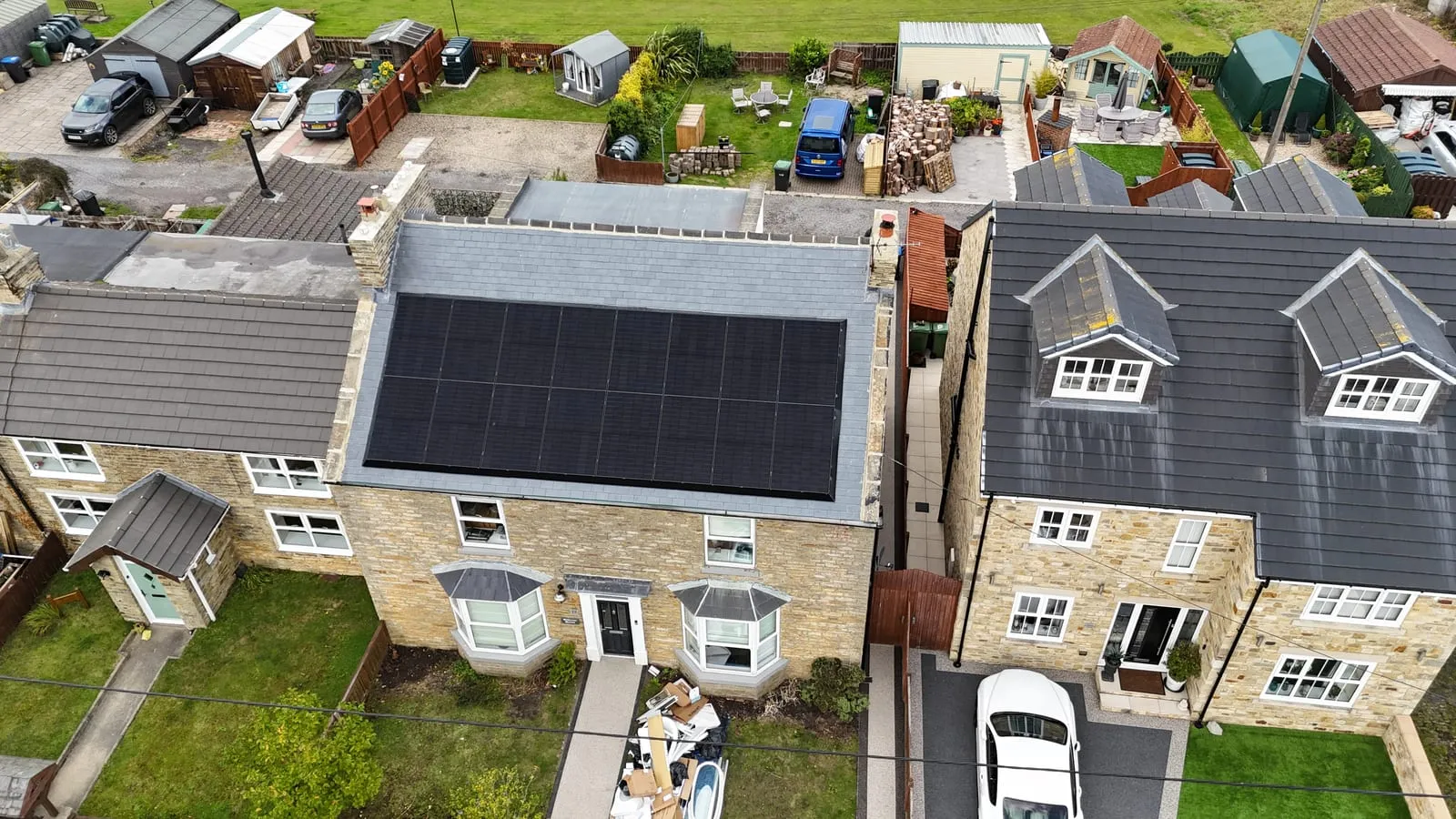
Listed building consent land on installers’ desks about twice a month at most firms — often as a “can you just check” enquiry that gets quietly parked. That’s a mistake. There are roughly 500,000 listed buildings in England alone (Historic England’s register), plus tens of thousands more in Scotland, Wales and Northern Ireland, and a meaningful share of them are churches, chapels, manor houses, farmhouses and conservation-area terraces whose owners are now facing the same energy bills as everyone else. Most solar installers won’t touch them. That reluctance is the opportunity.
Why generalist installers avoid listed building work
The economics explain the avoidance. A standard domestic install is a two-day job: survey, quote, scaffold, fix, commission, invoice. A listed building job adds a consent process that can run from six weeks to six months before a panel is ever ordered, with no guarantee of approval at the end of it. For a fitter paid on completed jobs, that’s dead time.
There’s also a skills gap. Standard in-roof or on-roof mounting systems assume a modern tiled or slated roof with standard batten spacing and no requirement to preserve historic fabric. Listed roofs are frequently hand-cut Welsh or Westmorland slate, stone slate (Collyweston, Cotswold), clay pantile, or lead — materials that a generalist crew has no experience fixing to without damage, and no relationship with a conservation officer to fall back on when something needs explaining.
The result: demand exists, supply doesn’t, and the installers who do build this competence get referred work by conservation officers themselves, because officers would rather deal with a firm that already understands the process than educate a new one on every application.
The faculty process for churches — and how it differs from listed building consent
This is the point most guides get wrong, so it’s worth being precise. Churches of England in current use are usually exempt from normal listed building consent under the Ecclesiastical Exemption (Listed Buildings and Conservation Areas Regulations). Instead, they go through the faculty jurisdiction — a separate internal Church of England legal process run through the Diocesan Advisory Committee (DAC) and the diocesan chancellor’s court, not the local planning authority.
In practice that means:
- The Parochial Church Council (PCC) applies to the DAC, which gives non-binding advice.
- For anything routine (which solar increasingly is, given the Church of England’s net-zero-by-2030 target), many dioceses now operate a List B fast-track process handled by the archdeacon rather than a full faculty petition — but only if the DAC and amenity societies raise no objection.
- Contested or complex cases (visible from a public highway, on a Grade I or II* church, in a conservation area) go to full faculty, which can involve statutory notices, a public notice period, and input from bodies like the Church Buildings Council, Historic England, and local amenity societies (SPAB, the Victorian Society, etc., depending on period).
- Non-Anglican listed places of worship (Catholic, Methodist, URC, synagogues) generally don’t have the ecclesiastical exemption in the same form and go through normal listed building consent with the local authority instead.
For a chapel or manse that’s listed but not a “church in current C of E use,” or for a rectory, church hall, or ancillary building, standard listed building consent applies via the local planning authority’s conservation officer — same rules as any other listed structure.
Getting this distinction right in a client conversation — faculty vs listed building consent, DAC vs conservation officer — is itself a credibility signal that separates a specialist from someone reading Wikipedia in the van. It’s a niche that rewards genuinely understanding solarpanelsforchurches.co.uk, which is built specifically around the faculty process, diocesan relationships and the net-zero church context rather than treating a church as just another commercial roof.
What conservation officers are actually looking for
Officers aren’t looking for reasons to refuse. Most conservation departments are under the same net-zero pressure as everyone else and have seen internal guidance (Historic England’s own position, published via its energy efficiency advice notes, is explicitly supportive of well-designed renewables on historic buildings). What they need from an application is evidence that the design has actually engaged with the building, not just been dropped onto Google Earth.
The application pack that gets approved fastest typically contains:
- A heritage impact statement — proportionate to significance, explaining what harm (if any) the installation causes and why the public benefit (decarbonisation, running cost reduction for a struggling PCC or charity) outweighs it.
- Roof plan and elevation drawings showing panel positioning relative to sightlines from public viewpoints, not just a satellite photo with a rectangle on it.
- Product specification — including frame colour, glass finish (anti-glare/anti-reflective coating matters a lot for churches near conservation-sensitive sightlines), and cable routing.
- A statement on reversibility — can the installation be removed later with the historic fabric intact? This one question does more work than any other in a heritage application.
- Where relevant, a structural assessment of an older roof structure — timber trusses on some 18th/19th-century churches were never designed for concentrated point loads, and that’s a legitimate objection if not addressed.
The single biggest cause of refusal or delay isn’t the panels themselves — it’s proposing them on a principal (street-facing) elevation when a rear or courtyard-facing roof plane was available. Positioning strategy, done early with the officer rather than after a scheme is fixed, resolves the majority of objections before they’re raised formally.
In-roof and low-profile mounting: the technical answer to “will it look wrong?”
Standard on-roof rail-and-clamp systems sit 80-150mm proud of the roof plane and cast a visible shadow line — exactly the visual disruption conservation officers object to on a slate or stone-slate roof. Two approaches solve this:
In-roof (integrated) systems replace a section of roofing material with a flush panel array, sitting within the roof plane rather than on top of it. On a listed building this only works where the existing covering can be reinstated around the array without loss of historic material — straightforward on a plain-tile or modern-slate roof, much harder to justify on hand-dressed stone slate where every unit is irregular and effectively irreplaceable.
Low-profile in-roof or “solar slate/tile” products — individual PV units sized and profiled to sit within an existing slate or tile course — are increasingly what gets consented on genuinely sensitive roofs, because from ground level and from any protected view they read as a subtly different roofing material rather than an obvious “solar array.” They cost more per kWp than a standard rack-mounted system and yield slightly less due to lack of rear ventilation, but on a building where standard mounting would be refused outright, the comparison isn’t “cheaper vs more expensive” — it’s “consented vs not consented.”
A third option, increasingly proposed and sometimes preferred by officers: ground-mount or ancillary-building mounting where the church or house has adjoining land or an outbuilding that isn’t itself listed (or is listed but less sensitive) — sidestepping the principal roof question altogether. Worth raising early in any site visit, because it can turn a six-month contested faculty into a routine List B approval.
Costs and yield: setting realistic client expectations
Heritage-appropriate installs cost more than a standard domestic or commercial job, and it’s worth being upfront about why: bespoke scaffolding sequencing to protect masonry and gutters, specialist roofers rather than general fitters, in-roof or solar-slate hardware at a premium over standard rail-mount, and the heritage statement/drawings package itself, which typically needs an accredited heritage consultant rather than being something the installer writes.
As a rough steer, expect 20-40% above a standard equivalent-sized system once consent documentation and specialist fixing are factored in — a typical 4kW domestic system that would be £6,000-£8,000 installed on a standard roof can realistically run £8,000-£11,000 on a listed roof requiring in-roof or solar-tile treatment. For churches, project costs vary enormously by roof size and access, but the Church of England’s Netzero Carbon Church programme and diocesan environment officers are a genuinely useful first point of contact for PCCs trying to understand budget ranges and available grant support before they commission a survey.
Yield isn’t materially different from a standard installation of the same orientation and pitch — a well-sited south-facing array will still deliver in the region of 850-950 kWh per kWp per year across most of England, more in the south. The 0% VAT relief on residential solar and battery installations (in place in Great Britain until 31 March 2027) applies to listed domestic properties exactly as it does to any other home, which materially softens the heritage premium for homeowners weighing up whether the extra process is worth it. It doesn’t apply to church/charity installs in the same way, since VAT treatment there depends on the entity’s status — worth flagging to any PCC treasurer rather than assuming.
Building the specialist offer
Firms that do this well tend to follow a repeatable pattern rather than treating each listed building as a one-off puzzle:
- Pre-application engagement is non-negotiable. A 20-minute call or site meeting with the conservation officer or DAC before drawings are finalised saves weeks compared with submitting a scheme cold and hoping.
- Keep a panel of heritage consultants for the heritage impact statement — this is rarely worth building in-house unless volume is high, and a named, known consultant that officers already trust speeds approvals.
- Photograph and document everything on survey day — roof material, fixing method options, existing penetrations, structural condition — because a second visit for missed detail extends an already long timeline.
- Price the consent process separately from the install, as a fixed-fee service, so clients understand they’re paying for expertise and paperwork, not just panels going up.
Regional firms are well placed for this because conservation officers and DACs operate locally — reputational trust is built one approved application at a time within a diocese or planning authority, not nationally. Installers already active in areas with dense historic building stock, from FLD Electrical in South Wales’s conservation-heavy valleys and market towns to Greenlinc Renewables working across Lincolnshire’s medieval churches and listed farmhouses, are naturally positioned to build this competence rather than starting cold — the relationships and roof-type experience compound with every project. The same logic applies to firms like Ecoaim covering Central Scotland’s listed and B-listed tenement and rural stock, where Historic Environment Scotland runs a broadly similar consent principle to Historic England’s, with its own separate application route.
Where this fits in the wider market
None of this shows up in the volume numbers that dominate solar industry reporting — 2025’s record 257,397 MCS-certified installs and roughly 21.6 GW of deployed capacity are overwhelmingly standard roofs. Listed and heritage work will never be a volume category. But it’s a margin category with real barriers to entry, genuine specialist demand, and a client base — PCCs under Net Zero Carbon Church pressure, conservation-minded homeowners, historic estate managers — who aren’t price-shopping the way a standard homeowner is. They’re shopping for someone who already knows what a faculty is.
For installers weighing whether to build this into their offer, the honest maths in our cost-of-solar-panels guide still applies as the baseline — heritage work is simply that baseline plus a consent and fixing premium, sold to a client who understands why. It’s a smaller pipeline than standard residential or commercial roofs, but a far less contested one, and for firms with the patience to build the relationships, it’s close to un-competed.
FAQ
Do listed buildings need planning permission for solar panels?
Usually yes, in the form of listed building consent from the local planning authority — separate from any need for standard planning permission, which most domestic solar in England is exempt from under permitted development rights (listed buildings lose some of those permitted development rights, which is why consent is typically still required).
Are Church of England churches exempt from listed building consent for solar?
Yes, if the church is in current use — they go through the ecclesiastical exemption and the faculty process (DAC and, where needed, the diocesan chancellor) instead of the local authority. Non-Anglican listed places of worship generally don’t have this exemption and follow standard listed building consent.
Does 0% VAT on solar apply to listed buildings?
Yes, for residential properties — the 0% VAT relief on solar and battery storage in Great Britain (in place until 31 March 2027) applies regardless of listed status. VAT treatment for church and charity installations depends on the entity, not the building’s listing.