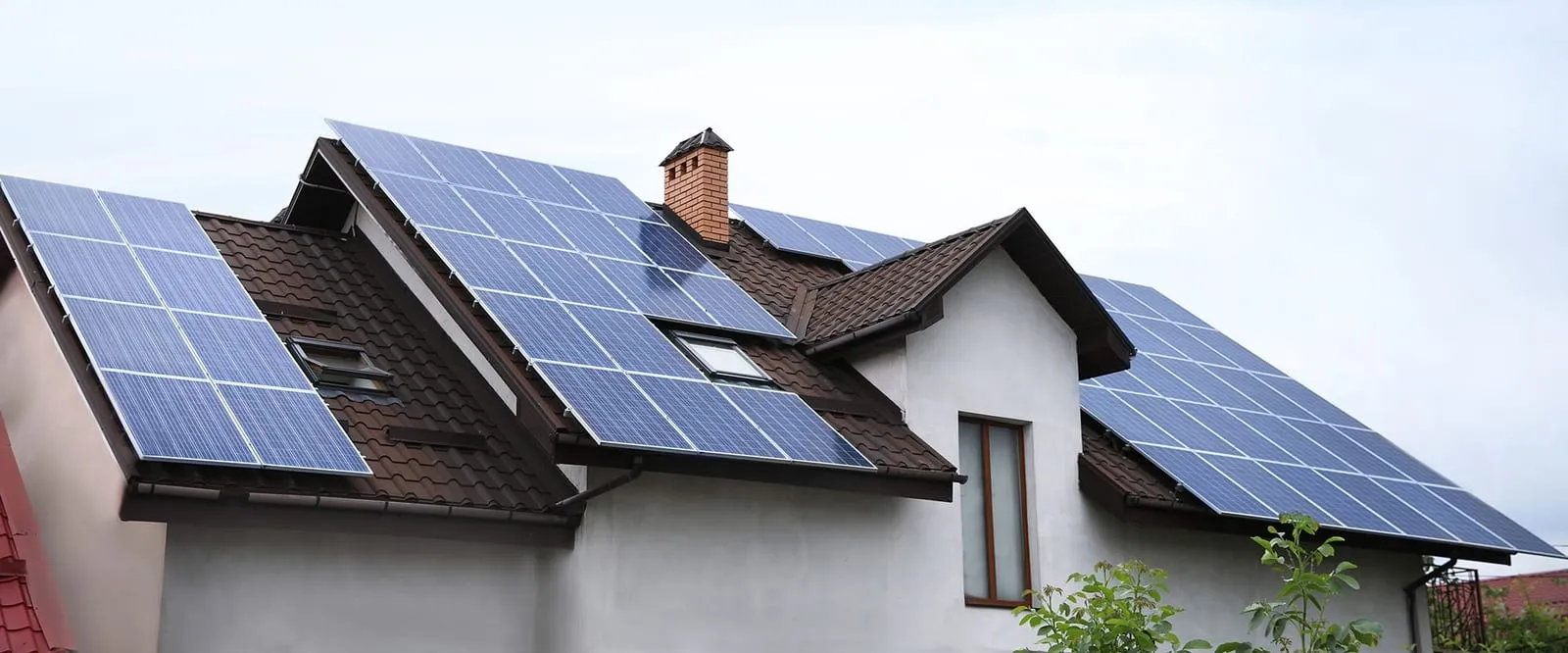
Leicester has committed its own operations to net zero by 2030, and for once that target isn’t just sitting in a council PDF — it’s showing up in procurement paperwork that commercial landlords and facilities managers are now having to answer. For anyone selling, financing or installing commercial solar in the East Midlands, that’s the more interesting story than the headline target itself.
The policy lever: procurement, not subsidy
Leicester City Council’s climate work sits under its Climate Ready Leicester programme, which carries the 2030 net-zero-for-council-operations target and the wider Climate Action Plan that underpins it. What matters commercially is the mechanism sitting underneath it: the council runs a Sustainable Procurement Strategy that explicitly favours suppliers with on-site renewables when contracts are scored and awarded.
That’s a meaningfully different lever from a grant or a subsidy. Grants create a one-off financial nudge; procurement weighting creates a recurring competitive disadvantage for any supplier that doesn’t have on-site generation, every time they bid for council work. For a city with 355,218 people and a supply chain that includes a large number of local SMEs bidding into council-adjacent contracts — facilities, construction, logistics, catering, professional services — that’s a slow-burn but structural driver of commercial rooftop demand that doesn’t depend on Westminster policy or the Smart Export Guarantee rate a given supplier happens to secure.
It also means the buying decision for a lot of Leicester commercial occupiers isn’t purely “what’s my payback period” — it’s “what does having solar on the roof do to my ability to win the next contract.” That reframes the sales conversation for installers working the patch, and it’s worth factoring into any commercial pitch aimed at businesses that supply, or want to supply, the council or its partners.
The commercial energy-cost backdrop
None of this works as a pipeline if the underlying economics don’t stack up, so it’s worth being precise about them rather than reaching for national averages. Leicester’s regional solar yield sits around 920 kWh per kWp per year — a reasonable East Midlands figure, above the UK’s broad ~850 kWh/kWp average but below the sunnier south coast’s 1,050+. Installed cost for a commercial system currently runs roughly £900–£1,200 per kWp, and a typical local commercial energy spend of around £38,000 a year gives a workable baseline for payback modelling on a mid-sized industrial or office roof, before any procurement-related soft value is factored in.
One point worth flagging clearly for trade readers pitching into Leicester right now: the 0% VAT rate on solar and battery storage running until 31 March 2027 applies to residential installations in Great Britain — it does not extend to commercial roofs. Commercial buyers are working from a different tax and finance framework, typically routed through capital allowances and asset finance rather than the VAT relief that’s driving the residential conversation. Anyone quoting a Leicester factory or business park owner needs to be explicit about that distinction, because conflating the two schemes is an easy way to lose credibility on a first call.
For sourcing and route-to-market, the finance side of commercial deals is increasingly its own specialism rather than a bolt-on. Where capex isn’t available or preferred, solar power purchase agreements are giving commercial occupiers a no-capex route onto the roof, while dedicated solar asset finance products and commercial solar finance structuring are increasingly what separates a quoted deal from a signed one on mid-market East Midlands sites. Given the average £38,000 annual spend figure, cost benchmarking against commercial solar panel costs is a sensible first step for any business modelling its own payback before committing.
Where the roof pipeline actually sits
Three estates do most of the heavy lifting when you map Leicester’s commercial roof stock: Beaumont Leys, Meridian Business Park and Optimus Point. Between them they cover the mix that matters for solar viability — retail-and-industrial sheds, Grade A office floorplates and logistics-oriented distribution space — which means no single system spec or sales pitch covers the whole city.
Beaumont Leys’ industrial and retail stock is the classic large-flat-roof profile that commercial solar has always targeted first, and it’s the kind of estate where solar panels for industrial units and solar for warehouses propositions land most easily, because the roof area-to-energy-spend ratio tends to be favourable without much persuasion needed. Meridian Business Park’s office-led occupier base is a different sell — lower baseload, longer decision chains, more ESG-reporting pressure from head office — but it’s also exactly the kind of site where car park canopy installations via solar car park structures can add generation capacity without touching the building envelope, which matters where roof space is shared or leasehold complications slow down a straightforward rooftop deal. Optimus Point’s logistics orientation puts it closer to the warehouse and distribution playbook, where daytime energy use from refrigeration, conveyor systems and EV charging infrastructure for fleet vehicles tends to make the payback case straightforward once someone actually runs the numbers.
The unifying point for anyone assessing the Leicester pipeline from outside the city: none of these three estates is being driven primarily by a national subsidy right now. They’re being driven by energy cost exposure at the £38,000-a-year-and-up level, by procurement pressure flowing down from the council and its supply chain, and by finance products that have made the capex barrier lower than it was three or four years ago.
The installer landscape
Leicester’s installer base sits in that useful middle ground for a UK trade audience — big enough to have specialist commercial capability, not so saturated that differentiation is impossible. Energy Concerns in Leicester is the clearest example of a locally-rooted operator running solar, battery, EV and AC work across the city, which matters for the procurement dynamic above: council-adjacent SMEs generally want to work with a supplier who understands local planning and grid-connection quirks, not a national installer parachuting in for a single job. For businesses further down the qualification funnel, solar for businesses in Leicester and commercial solar panels Leicester both give a useful starting picture of installed cost ranges and typical system sizing for the city before a business gets as far as a site survey.
It’s also worth widening the lens slightly. The regional installer base doesn’t stop at the city boundary — capacity in the wider Midlands, including operators such as Midland Solar working the Birmingham and West Midlands commercial market, gives Leicester buyers a genuine choice of scale and specialism rather than a single default supplier. And once a system is on the roof, the conversation the trade tends to under-serve is what happens in year three onwards: inverter warranties expire, string performance drifts, and a commercial buyer who’s just made an ESG or procurement-driven capital decision doesn’t want to discover a underperforming array eighteen months later. National O&M coverage through operators like Solar Maintenance Solutions is the piece that keeps a procurement-driven install actually delivering the generation figures it was sold on, which matters more in a market like Leicester’s where the buying decision is partly reputational rather than purely financial.
Reading Leicester against the national picture
It’s worth putting Leicester’s pipeline in the context of what’s happening nationally, because the scale of the underlying market shift is easy to underestimate from a single-city view. 2025 was a record year for UK solar: 257,397 MCS-certified installations, up 32% on the year before, taking cumulative deployed capacity to roughly 21.6 GW and solar’s share of UK electricity generation to around 6.4%. That’s covered in more depth in Solar Weekly’s UK solar industry 2026 data round-up, but the headline relevant to Leicester specifically is that the growth has been increasingly commercial and procurement-led rather than purely residential-subsidy-led — which is exactly the pattern the city’s own Sustainable Procurement Strategy is reinforcing at local level.
For installers thinking about how to position into a market like this, the marketing challenge is less about explaining what solar is — most commercial buyers already know — and more about explaining why now, and why this particular procurement or finance route. Solar Weekly’s guide to installer marketing covers the positioning question in more detail for operators building a pipeline in policy-driven markets like Leicester’s.
What this means for the trade
Leicester isn’t a market being pulled along by a headline grant scheme, and that’s actually the more durable story. A 2030 council net-zero target, a procurement strategy that quietly penalises suppliers without on-site renewables, a workable regional yield of 920 kWh/kWp, and three distinct estate profiles with genuinely different system requirements — that’s a slower-building but stickier pipeline than a one-off incentive that expires on a fixed date. For installers and investors assessing where to put commercial resource in the East Midlands, Leicester’s combination of local procurement pressure and realistic £900–£1,200/kWp economics makes it a market worth working methodically rather than opportunistically — starting with the estates that already have the roof stock and the energy spend to justify the conversation.