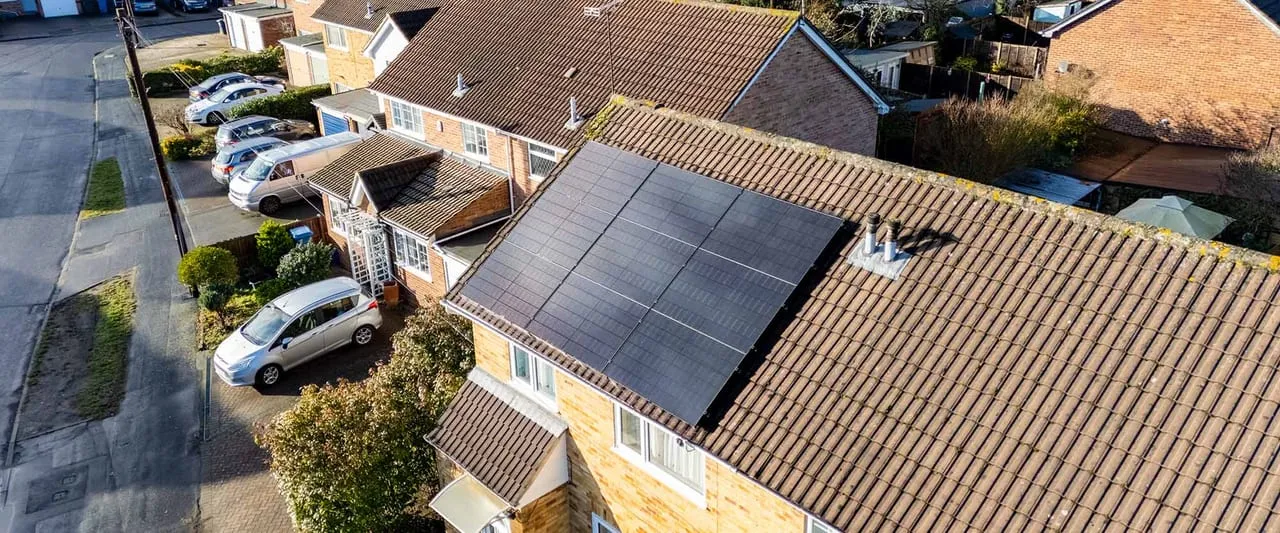
Hull rarely tops the national solar league tables the way Bristol or Cornwall do, but for installers and investors reading the pipeline rather than the postcode, the Humber estuary is quietly becoming one of the more interesting commercial solar stories in England. A council with a hard 2030 net-zero deadline, a Freeport with live tax incentives, and a chemicals cluster under real decarbonisation pressure add up to a procurement environment worth tracking — not just admiring from a distance.
The policy backdrop: Hull City Council’s 2030 deadline
Hull City Council has committed the city to net-zero by 2030, a target set out in the Hull Carbon Neutral 2030 Plan. That’s a full two decades ahead of the UK’s statutory 2050 baseline, and for a local authority estate that includes leisure centres, depots, schools and commercial units, hitting it without significant on-site generation is not realistic. For installers, a council with a self-imposed 2030 deadline is a different kind of client to one working off the national 2050 timeline — the procurement urgency is structurally higher, and roof-mounted PV on council-owned commercial and civic buildings is one of the few decarbonisation levers that can be specified, tendered and installed within a single electoral cycle.
The trade signal here isn’t a single flagship contract — it’s the direction of travel. Local authorities that publish an accelerated net-zero date tend to follow with retrofit programmes, framework agreements, and — increasingly — invitations for private-sector co-investment on council-adjacent land. Hull’s 267,100 population gives it a commercial and civic building stock large enough to matter, without the tendering complexity of a core city the size of Leeds or Sheffield.
Humber Freeport: the underused Enhanced Capital Allowance angle
The more concrete lever for commercial solar economics is the Humber Freeport, which covers tax sites across the estuary including land at Hull’s docks and the Saltend Chemicals Park. Freeport tax sites carry Enhanced Capital Allowances (ECAs) — a 100% first-year deduction against corporation tax for qualifying plant and machinery investment made within the designated tax site, running to the site’s expiry date under current Freeport rules. Solar PV, inverters and associated electrical plant can, subject to site-specific eligibility checks, fall within that definition.
This matters commercially in a way that generic “go green” messaging doesn’t: it changes the after-tax payback maths for any business occupying qualifying Humber Freeport land, on top of the standard capital allowances regime available UK-wide. For installers quoting commercial jobs in and around Hull, checking whether a prospect’s site sits inside a Freeport tax boundary is now a legitimate part of the pre-sales qualification process — it can be the difference between a marginal payback case and a compelling one. It’s a detail generalist installers from outside the region often miss, and a genuine differentiator for firms who know the Humber Freeport map well enough to raise it unprompted. The business solar grants and incentives hub at solarpanelgrantsforbusinesses.co.uk is a useful reference point for walking clients through how ECAs interact with standard commercial solar cost recovery.
Saltend Chemicals Park: the decarbonisation anchor
Saltend Chemicals Park, on the eastern edge of the city within the Humber Freeport boundary, is the single most consequential site in Hull’s industrial decarbonisation story. As one of the UK’s most carbon-intensive industrial clusters — part of the wider Humber region that accounts for a disproportionate share of English industrial emissions — Saltend has been a focal point for hydrogen, carbon capture and electrification investment for several years. That doesn’t automatically mean roof-mounted or ground-mounted PV at scale (chemicals processing sites have their own load profiles and space constraints), but it does mean the surrounding logistics, warehousing and support-services occupiers on and around the Saltend corridor are operating in a climate where on-site generation is increasingly viewed as table stakes for tenancy and procurement conversations, not a nice-to-have.
For installers working this patch, the practical opportunity sits less with the chemicals plant itself and more with the tier-two and tier-three occupiers around it — distribution, contract logistics and light industrial units whose energy bills and roof space make for straightforward commercial PV cases. The solar for warehouses guidance at solarpanelsforwarehouses.co.uk and the distribution-centre-specific breakdown at solarpanelsfordistributioncentres.co.uk both map closely onto the kind of large flat-roof stock found along that corridor.
Where the roof pipeline actually sits
Three estates dominate the commercial roof conversation in Hull:
| Estate | Character | Commercial solar relevance |
|---|---|---|
| Hull Marina | Mixed retail, leisure, hospitality and office stock around the waterfront | Smaller roof footprints but strong daytime-load match for hospitality/retail; battery storage often the better lever than PV alone |
| Saltend | Chemicals cluster plus surrounding logistics and industrial support sites | Large flat roofs on adjacent logistics units; Freeport ECA eligibility; higher baseline loads |
| Priory Park | Established out-of-town industrial and business park on the western side of the city | Classic mid-size commercial/industrial roof stock; strong candidate for standard rooftop arrays without the site-specific complexity of Saltend |
Priory Park in particular is the kind of site that rarely makes headlines but does most of the actual installed capacity in a city like Hull — mid-sized industrial units with straightforward roof geometry, daytime-heavy consumption, and owner-occupiers who feel energy costs directly rather than through a service charge. It’s the segment where a well-run regional installer, not a national contractor, tends to win the work.
The economics: why the numbers stack up here
Hull sits in the Yorkshire and the Humber region, which — being further north and slightly cloudier than the south coast — returns a typical solar yield of around 860 kWh per kWp per year, a shade below the England-wide average but perfectly commercial when set against realistic system costs and daytime commercial consumption. On a mid-size commercial roof, that yield still supports a payback profile in the 6–9 year range once self-consumption, Enhanced Capital Allowances (where the site qualifies) and rising grid import costs are factored in — well inside the 25–30 year lifespan of a modern N-type panel array.
The demand side of the case is strong too. Local commercial energy spend in Hull averages around £36,000 a year for a typical mid-size business — a bill large enough that even partial self-generation moves the needle on operating costs, and large enough to justify a proper feasibility study rather than a back-of-envelope quote. Set against a relatively affordable local property market — average house prices in Hull sit around £145,000, well below the England average — the cost of commercial premises and the cost of energy are diverging in a way that makes on-site generation an increasingly obvious lever for local business owners trying to control the one major overhead that’s actually within their control.
None of this is unique to Hull, but the combination — a large, energy-intensive industrial base, a Freeport tax incentive most businesses haven’t fully explored, and a council with genuine urgency behind its net-zero date — is a sharper-than-average commercial case for the region. For a broader national comparison of commercial payback economics, the commercial solar panel cost breakdown on thecostofsolar.co.uk is a useful benchmark against which to sense-check Humber-specific quotes.
The installer landscape
Hull’s commercial solar installer base is thinner than West Yorkshire’s, which creates genuine opportunity for regional firms willing to build a presence on the Humber. YEERS across Yorkshire — covering solar, battery, heat pump and EV installation across the wider county — is one of the more established names a Hull commercial client is likely to encounter when researching options, and its footprint gives it the scale to handle multi-site commercial rollouts rather than one-off domestic jobs. Just across the Humber, Greenlinc Renewables in Lincolnshire is MCS-certified and close enough geographically to service Saltend-adjacent and South Bank sites without the logistics penalty a Midlands or southern contractor would carry. Further south, AMP Pro Electrical’s Doncaster and South Yorkshire renewables team rounds out a realistic shortlist of regional installers with genuine commercial electrical capability, not just domestic PV experience.
MCS certification remains the baseline qualifying filter for any of this work — it’s required for Smart Export Guarantee eligibility, and increasingly it’s what commercial procurement teams ask for by default. With 257,397 MCS installations completed across the UK in 2025 (up 32% year-on-year) and roughly 21.6 GW of MCS-certified capacity now deployed nationally, the growth trend is unambiguous — the open question for the Humber specifically is which regional installers convert that national momentum into a durable commercial book of business in Hull, rather than ceding it to contractors travelling in from Leeds or Sheffield for one-off jobs.
Financing and specialist routes
For occupiers unwilling or unable to fund a system outright — a common position for owner-occupiers whose capital is tied up in the business itself — commercial finance and power purchase agreement structures are increasingly part of the conversation. The commercial solar finance resource at commercialsolarfinance.co.uk and the PPA-specific guidance at solarpowerpurchaseagreements.co.uk both cover routes that let a business benefit from on-site generation without a large upfront capital outlay, which is often the more realistic sales conversation for mid-size Priory Park and Marina-area occupiers than a straight cash purchase. Where load profiles are more evening-weighted — hospitality and leisure operators around the Marina, for instance — the addition of commercial battery storage, covered in detail at batterystorageforbusiness.co.uk, typically does more for the payback case than adding panel capacity alone.
For installers and specifiers wanting a single reference point on general commercial solar specification and procurement, commercial solar panels Hull is the closest thing to a city-specific commercial hub currently available, and the location-specific breakdown at solar for businesses in Hull covers the broader business case for local occupiers researching their options independently.
What the trade should watch next
Three signals worth tracking over the next 12–18 months: whether Hull City Council moves from stated ambition to a published commercial-building retrofit tender (the clearest test of whether the 2030 target has real budget behind it); whether uptake of Freeport Enhanced Capital Allowances at Saltend-adjacent sites becomes visible in planning and business-rates data, which would confirm the incentive is actually being used rather than just available; and whether any of the regional installers currently servicing Hull opportunistically — rather than with a dedicated local presence — decide the commercial pipeline justifies opening a Humber-based office. For a wider read on how installer marketing and regional positioning is shifting across the UK trade in 2026, Solar Weekly’s own UK solar industry overview and installer marketing analysis both cover trends that apply directly to how a firm should think about entering a market like Hull’s. For consumer-facing context on how well solar actually performs in a UK climate like the Humber’s, thebritishsolarblog.co.uk’s explainer on UK solar performance is a useful piece to have on hand when fielding client scepticism about northern yields.
Hull isn’t going to out-install London or Bristol on volume. But for a trade audience assessing where the next tranche of realistic, financeable commercial solar demand is coming from, a mid-size industrial city with a hard net-zero deadline, an underused tax incentive, and a genuine roof pipeline across three distinct estate types is worth more attention than its current national profile suggests.