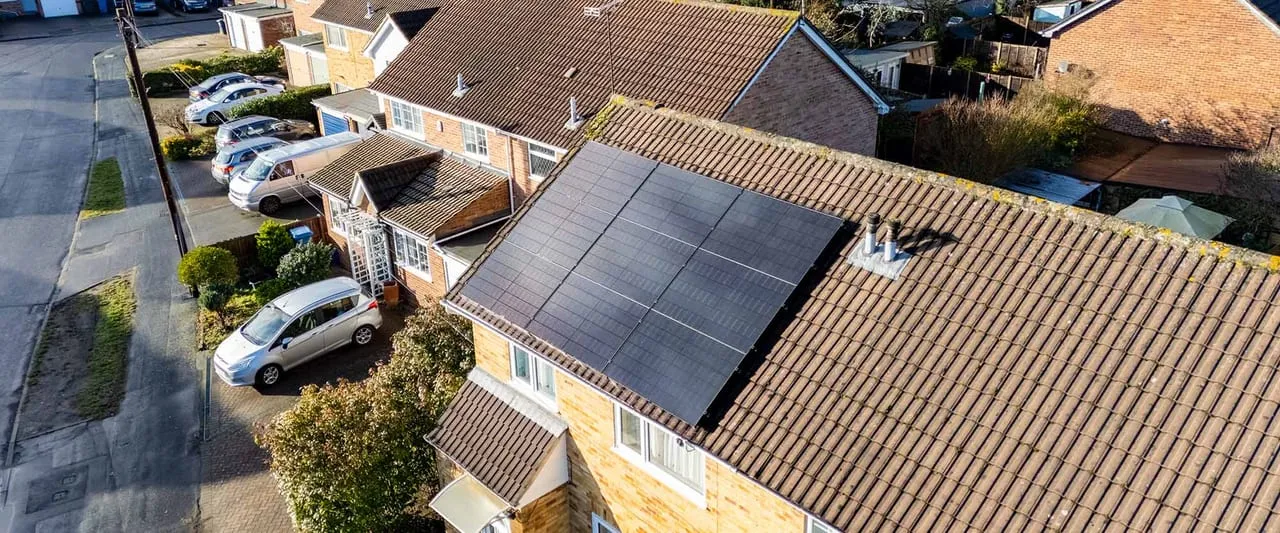
ECO4 and the Great British Insulation Scheme (GBIS) are the two funded-measures schemes keeping a meaningful slice of the UK retrofit and renewables trade in work through 2026. Between them they cover insulation, heating measures and — for ECO4 specifically — solar PV in some low-income, low-EPC households. For installers who understand the eligibility flow and get the paperwork right first time, this is genuinely profitable volume work. For installers who don’t, it’s a slow-motion cash-flow disaster of clawbacks, rejected claims and TrustMark suspensions. This post sets out how the two schemes actually pay, who qualifies, and why the admin discipline — not the install quality — is usually what decides whether a job is profitable.
What ECO4 and GBIS actually are
Both are government-mandated obligations placed on the large energy suppliers (British Gas, E.ON, Octopus, EDF, Scottish Power and others), not grants funded directly by the Treasury. The suppliers meet their obligation by paying for measures installed in eligible homes, and that funding flows down through scheme managers and installer networks to the trade doing the physical work.
ECO4 (Energy Company Obligation, phase 4) runs to March 2026 under its current rules, with a successor phase expected to follow in a broadly similar shape — always check the live scheme rules before quoting, because obligation periods and qualifying criteria are revised centrally. ECO4 targets low-income and fuel-poor households living in the least efficient homes (typically EPC bands D, E, F and G), funding a “whole-house” retrofit approach: insulation, heating controls, and in some cases heating system replacement or renewable measures including solar PV, where PV forms part of a wider package addressing fuel poverty rather than being installed as a standalone free-solar offer.
GBIS (Great British Insulation Scheme) is narrower and simpler: it funds insulation measures — cavity wall, loft, room-in-roof, solid wall — for homes in council tax bands A-D (England) with lower EPC ratings, plus a general low-income eligibility route. It doesn’t fund solar or heating systems. Where GBIS matters to solar and renewables installers is as a lead-generation and cross-referral layer: a home that qualifies for GBIS insulation frequently also has an ECO4-eligible occupant, and a fabric-first insulation job is often the precondition for a later solar or heat pump install to actually perform.
Neither scheme should be confused with the Boiler Upgrade Scheme, which pays a flat £7,500 towards an air source heat pump and has nothing to do with solar PV, or with agricultural solar grants such as the Improving Farm Productivity grant (England, roughly 25% of eligible cost — rates differ by UK nation), which sit in a completely separate funding stream aimed at commercial farm buildings rather than domestic fuel poverty.
How the money actually flows
This is the part installers new to funded work consistently underestimate. You are not being paid by “the government.” You are being paid by an obligated energy supplier, via a scheme provider or umbrella organisation, against a specific, auditable, TrustMark-registered installation that has passed a technical monitoring check (TMC) and, in most cases, an independent post-installation survey.
The typical chain looks like this:
- Lead identification — a household is identified as potentially eligible (via a scheme provider’s canvassing, a local authority flexible-eligibility referral, or your own marketing).
- Eligibility assessment — an accredited retrofit assessor confirms EPC status, income/benefits eligibility or LA Flex qualification, and specifies the measure(s) via a PAS 2035 retrofit plan for anything beyond single insulation measures.
- Installation — carried out by a TrustMark-registered, TrustMark ECO-approved installer to PAS 2030 / MCS standards where relevant (MCS certification is mandatory for any solar PV element, and remains the gateway to Smart Export Guarantee eligibility for the homeowner afterwards).
- Evidence submission — photographic evidence, signed customer declarations, EPC pre/post data, and installer certification uploaded to the scheme provider’s portal.
- TMC / audit — Ofgem-mandated technical monitoring on a sample of jobs; failed audits can claw back payment on that job and put future submissions from the same installer under wider scrutiny.
- Payment — released to the installer (directly, or via the umbrella scheme provider taking a margin) typically 4-8 weeks after clean evidence submission, longer if evidence is queried.
The gap between steps 3 and 6 is where most installer cash-flow problems live. A queried file — a missing signature, an EPC that expired between assessment and install, a photo that doesn’t clearly show the required detail — doesn’t just delay one payment. It can hold up a batch, because scheme providers often submit and audit in cohorts.
Why paperwork discipline is the actual margin driver
Ask any installer who has run funded-measures work for more than a year and they’ll tell you the technical install is rarely what goes wrong. What goes wrong is:
- EPC timing. The EPC used for eligibility must be in date and match the property at the point of assessment. A homeowner who’s had window replacements or a loft conversion since their last EPC can invalidate the eligibility chain retrospectively.
- Evidence gaps. Missing “before” photos, unclear loft depth measurements, or absent gas safety documentation on combi-related work are the single biggest cause of TMC failures.
- LA Flex documentation. Local Authority Flexible Eligibility routes (used to bring in households who don’t meet the standard benefits-based criteria) require a signed council declaration — installers who don’t chase this before starting work risk doing the job for nothing.
- PAS 2035 retrofit coordination. Any ECO4 job involving more than one measure needs a retrofit coordinator sign-off on the whole-house plan. Skipping this, or treating it as a box-ticking afterthought, is a common and expensive mistake.
- Installer accreditation currency. TrustMark and MCS accreditations lapse or get audited; a job installed during a lapsed accreditation window is generally unpayable regardless of install quality.
None of this is exotic. It’s just unforgiving of shortcuts, and it rewards installers who build a proper back-office process — dedicated evidence-capture checklists, a retrofit coordinator relationship, and someone whose job is chasing paperwork rather than fitting kit — over installers who treat compliance as an afterthought bolted onto a sales-led operation.
For installers who want the eligibility and evidence rules explained without wading through Ofgem’s own documentation, eco4application.co.uk is a useful plain-English reference point for checking a household’s likely ECO4 route before committing survey time, and gbisapplication.co.uk does the same for the insulation-only GBIS criteria — worth bookmarking for the front-of-house team taking enquiry calls, since a five-minute eligibility sense-check saves a wasted site visit.
Where solar PV actually fits inside ECO4
It’s worth being precise here because “free solar” claims cause reputational damage across the whole trade. ECO4 can fund solar PV, but only as part of an approved whole-house retrofit for a genuinely eligible low-income, low-EPC household — it is not a universal free-solar scheme, and marketing it as one is exactly the kind of claim that has drawn Ofgem and Trading Standards scrutiny of the sector before. Contrast this with the general domestic market, where the current 0% VAT rate on installed residential solar and battery storage (in Great Britain, in force until 31 March 2027) is doing far more heavy lifting for uptake than any grant — a typical 4kW system currently costs in the region of £6,000-£8,000 installed, with a 10kW system more like £13,000-£17,000, and homeowners paying on their own steam still make up the overwhelming majority of the 257,397 MCS-certified installs recorded in 2025.
Installers running a mixed book — some ECO4 fuel-poverty work, some full-price retail installs — need genuinely separate sales conversations for each. A retail customer asking about payback is a very different conversation from an ECO4-eligible household being assessed for a whole-house measure, and conflating the two in marketing material is a compliance risk in itself.
For installers wanting to see how established regional firms structure that retail-side conversation cleanly alongside funded work, ElectriFusion Solutions in Doncaster and Ecoaim in Livingston both run credible domestic solar operations that sit apart from any funded-scheme messaging, which is the right model — keep the two revenue streams distinct in how they’re marketed even if the same install teams deliver both.
The commercial-side parallel
None of ECO4 or GBIS touches commercial property — both are domestic-only schemes — but installers diversifying into commercial and farm-building solar to smooth out the seasonality and policy risk of funded domestic work are increasingly common. The economics are different (commercial solar typically runs £900-£1,200 per kWp installed rather than the domestic per-kW pricing above) and the funding routes are entirely separate — commercial buyers are more often looking at asset finance or a power purchase agreement structure than at any grant, and businesses researching their options tend to land on hubs like Commercial Solar Panel Installation or Solar Panel Grants for Businesses rather than domestic ECO-style portals. Farm-building solar in particular runs through the Improving Farm Productivity grant route rather than anything resembling ECO4, so installers pitching to agricultural clients need a completely different eligibility script.
A practical checklist before taking on funded-measures work
- Confirm your TrustMark and (for solar) MCS accreditation is current and correctly scoped for the measures you intend to claim against.
- Build a standard evidence pack template per measure type and train every installer on it — don’t rely on office staff to retrofit compliant evidence from incomplete site photos.
- Get EPC currency checked at point of assessment, not at point of quote — properties change between the two.
- Establish a relationship with a retrofit coordinator early if you’re doing multi-measure ECO4 work; don’t leave PAS 2035 coordination until submission time.
- Separate your funded-scheme marketing from your retail marketing completely, in both language and channel.
- Budget cash flow assuming 6-8 week payment lag as the norm, not the exception.
If you want a wider read on where domestic solar pricing sits in 2026 more generally — useful context when a homeowner asks why they don’t qualify for a scheme and what it costs to go private instead — see thecostofsolar.co.uk’s UK solar panel cost breakdown, and for the underlying market numbers behind the current installer boom, Solar Weekly’s own 2026 UK solar industry data is worth a read alongside this piece.
ECO4 and GBIS aren’t going away as a source of installer volume, but they reward operational discipline over sales hustle. The installers making genuine margin from funded work in 2026 are the ones who’ve industrialised their paperwork, not the ones who’ve industrialised their canvassing.