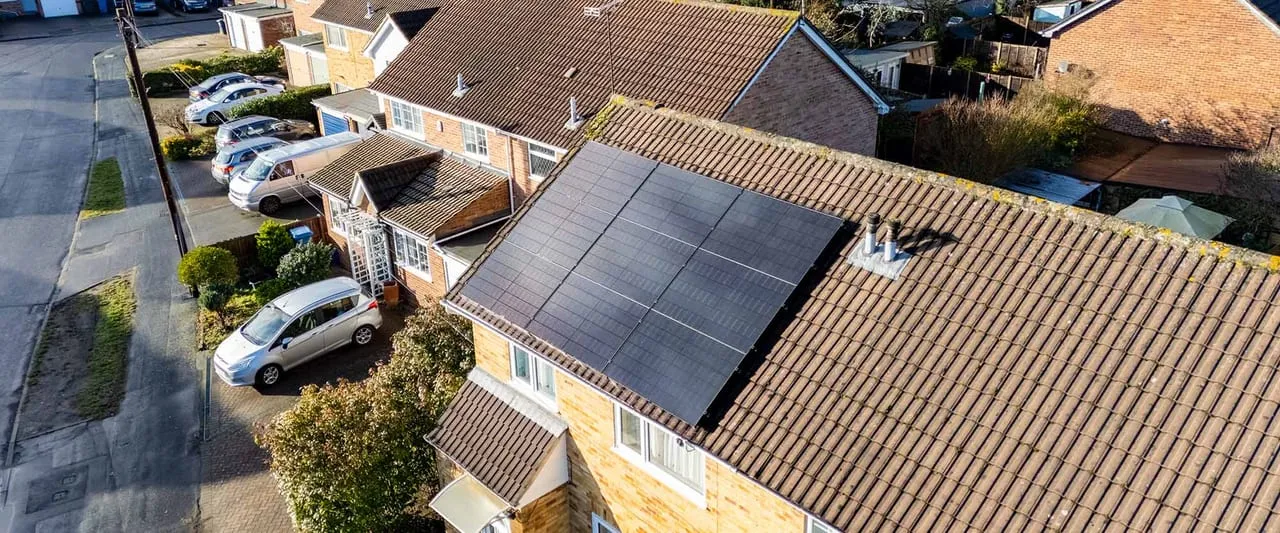
Care homes run every hour of every day. Kitchens, laundries, hoists, hot water, medical equipment and lighting don’t switch off for a weekend or a quiet period — occupancy-driven demand is close to flat, 24/7, 365 days a year. That single fact makes residential and nursing care one of the best-matched commercial sectors for solar-plus-battery of any vertical in the UK, and yet it remains one of the least penetrated. Warehousing, logistics and food retail have had years of EMD-style marketing and installer attention. Care is still mostly overlooked.
Why the load profile matters more than the roof
Most commercial solar sales pitches start with roof space. For care homes, the more interesting number is the load curve. A typical 40-60 bed home runs continuous baseload from communal kitchens (three meals a day, often with regen/blast-chill kit), industrial laundry (infection-control wash cycles run hot and hard), passenger and bariatric hoists, nurse-call and building management systems, and 24-hour heating/hot water on top of standard lighting and small power. Unlike an office that empties out at 6pm and over weekends, a care home’s demand barely dips at night — waking staff, night lighting, and medical fridges keep pulling load through the hours when solar generation is obviously zero.
That’s the core economic story: solar PV alone captures the daytime slice of a load that never really goes away, and a battery captures a meaningfully larger share of the rest by shifting cheap daytime generation (or cheap overnight import) into the evening and night baseload. On a typical UK yield of roughly 850 kWh per kWp per year (higher across the southern half of England), even a modest rooftop array is likely to be self-consumed at a very high rate on a site like this, because there’s almost always a fridge, a laundry cycle or a kitchen extraction fan ready to absorb the output. Self-consumption is where the commercial solar business case actually lives — every kWh generated and used on-site displaces electricity bought at something close to the Ofgem-influenced import rate (commonly cited around 25p/kWh for domestic tariffs, with commercial rates varying by contract), rather than being exported at a supplier-set Smart Export Guarantee rate that typically sits in the 12-20p/kWh range at best.
The regulatory and cost backdrop for 2026
A few facts worth being precise about, because care operators and their finance teams will ask:
- 0% VAT applies to the installation of residential solar and battery storage in Great Britain until 31 March 2027, after which the rate is scheduled to revert to 5%. This is a residential-property relief, so it typically doesn’t apply directly to a standalone commercial care facility in the way it would a domestic retrofit — but many smaller residential care settings and mixed-use sites need this checked property by property, not assumed.
- There is no universal solar grant for care homes. Support schemes such as ECO4 and the Warm Homes programmes are means-tested and aimed at low-income domestic households with poor EPC ratings, not commercial care operators. The Boiler Upgrade Scheme’s £7,500 grant is for air source heat pumps and does not cover solar PV.
- Commercial solar costs in 2026 are commonly quoted in the region of £900-£1,200 per kWp installed, though larger multi-site procurement can improve on that. A care home battery add-on typically runs to a similar per-kWh cost logic as domestic systems (roughly £400-£700 per kWh installed), scaled up for commercial-grade cycling and warranty terms.
- MCS certification remains the baseline requirement for SEG eligibility, and it’s worth an operator’s finance director understanding that export income is a secondary benefit here, not the primary driver — the primary driver is bill offset against a load that barely varies by time of day.
For the specifics of current cost bands and how they’re moving, thecostofsolar.co.uk’s commercial solar panel cost breakdown is a useful reference point to sense-check quotes against, and its payback period analysis is directly relevant to a sector where payback is usually driven by avoided-cost economics rather than export income.
Why care is under-served
Ask installers why they haven’t built a pipeline in care, and the answers cluster around three things. First, procurement is unfamiliar — care groups buy through facilities managers, regional operations directors or sometimes third-party estates consultants, not the finance-led capex processes installers are used to in logistics or manufacturing. Second, roofs on older care buildings (many converted from Victorian houses or built in the 1980s-90s NHS-adjacent boom) can have structural quirks, asbestos-era roofing materials, or listed-building constraints that require a proper structural survey before anyone commits to a design — that extra diligence step puts some installers off pursuing the sector at volume. Third, and most simply: nobody has built the commercial content and case-study library that exists for warehouses or schools, so care operators researching solar don’t find sector-specific guidance easily.
That gap is exactly why solarpanelsforcarehomes.co.uk exists as a dedicated sector hub — it’s one of the only UK resources built specifically around care-home load profiles, CQC-relevant considerations (backup power, resilience during outages, protecting vulnerable residents from disruption) and the operator-chain procurement question below, rather than a generic commercial solar page with “care homes” bolted on as a keyword.
Operator chains: the multi-site opportunity installers keep missing
The UK care sector isn’t a long tail of identical single-site businesses. A meaningful share of beds sits within regional and national operator groups running anywhere from a handful to several hundred homes, often under shared estates management. That structure is commercially significant for two reasons.
First, a single successful installation with one home in a group is a far stronger foot in the door than a single win in almost any other commercial vertical, because the estates or facilities director who signed off site one is very often the same person who controls capex sign-off for site fifteen. Winning the case study is winning the sales meeting for the whole portfolio. Second, multi-site groups can standardise designs — similar building stock, similar kitchen/laundry specs, similar hoist and nurse-call loads — which means the second, third and tenth installations can be quoted and delivered faster once the first has established the template. That’s a materially different sales motion to chasing one-off SME roofs, and it rewards installers and consultants who invest in understanding the operator landscape rather than treating every enquiry as a cold start.
For installers building that pipeline, it’s worth looking at how adjacent 24/7-load sectors have been approached: solarpanelsforhospitals.co.uk covers the same continuous-demand logic at NHS scale, and solarpanelsforcharities.co.uk is relevant where care provision sits within a charitable trust structure rather than a private operator group — a genuinely common ownership model in UK social care that changes the funding and procurement conversation again.
Resilience is a genuine selling point, not just a green one
Care homes have a regulatory and moral obligation around continuity of care that most commercial buildings don’t carry. A grid outage that’s a minor inconvenience in a warehouse is a real operational risk in a home with residents on medical equipment, refrigerated medication, and hoists needed for basic care tasks. Battery storage paired with solar changes the resilience conversation from “nice to have” to “risk mitigation the CQC-registered manager can point to.” That’s a genuinely different framing to the pure bill-saving pitch installers default to elsewhere, and operators respond to it because it maps onto language they already use internally around risk registers and business continuity planning.
This is also where the economics tilt further in solar-plus-storage’s favour versus solar alone. A care home’s battery doesn’t just need to be sized for evening peak-shifting — depth of discharge and backup capability both matter, and that pushes design conversations toward higher-spec commercial battery systems rather than the smallest box that clears the payback hurdle. batterystorageforbusiness.co.uk is a useful reference for installers scoping that side of the design separately from the PV array, since the two components often get value-engineered independently by finance teams who don’t intuitively see them as one system.
What a realistic quote should include
Operators evaluating proposals should expect installers to survey roof structure and load profile before quoting rather than working off satellite imagery alone, to size the system against actual half-hourly consumption data (most care groups already hold this from their energy supplier) rather than a generic commercial rule of thumb, and to separate the PV and battery business cases so the board can see bill offset, resilience value and any export income as distinct line items rather than one blended number. Regional installers with genuine commercial-scale experience — rather than domestic fitters extending into commercial work — are worth prioritising given the structural survey and compliance considerations involved; ececoenergy.com in Essex and East Anglia and drenergyltd.co.uk covering Bristol and the South West both work at genuine commercial scale rather than treating larger sites as oversized domestic jobs, which is the right kind of contractor for a sector where the survey and compliance step genuinely matters.
The opportunity, in short
Care is a sector with a flat, high, genuinely continuous load; funding that has to be justified on hard bill-offset numbers rather than grant eligibility; a multi-site procurement structure that rewards the installer who wins the reference site; and almost no dedicated commercial content or case-study base compared with warehousing, retail or education. For installers and investors looking at where UK commercial solar still has genuine headroom in 2026, care homes are close to the top of that list — not because the sector is easy, but because almost nobody else has bothered to build the expertise, the case studies or the specialist relationships yet.
For broader UK installer and market trend data across sectors, solarweekly.co.uk’s UK solar industry overview tracks the wider deployment numbers this sector sits within.