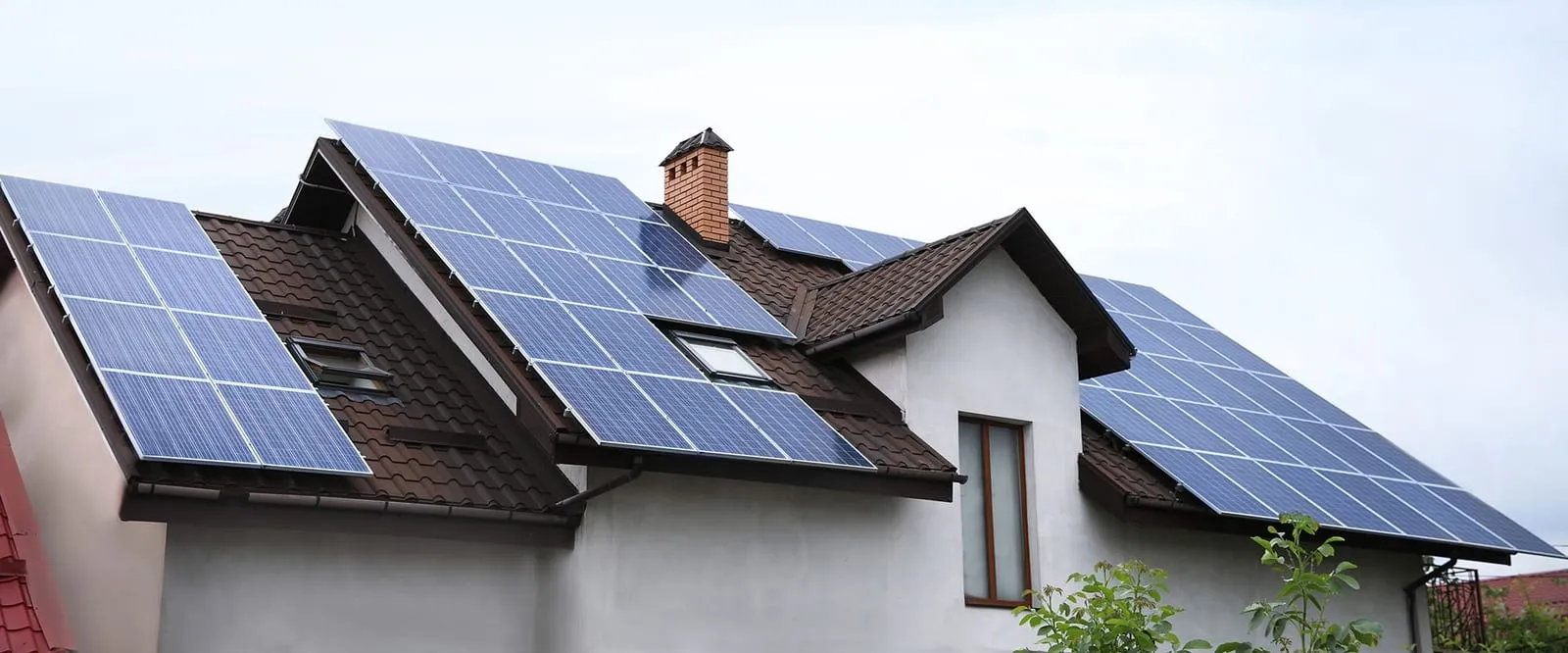
Bristol doesn’t get talked about as a commercial solar market the way Leeds or Birmingham do, but the fundamentals are stronger than the coverage suggests. A council with a hard 2030 net-zero target, a combined authority actively funding business decarbonisation, three distinct industrial estates with underused roof stock, and South West solar yields that outperform most of England. For installers and investors deciding where to put resource this year, Bristol is worth a proper look — not as a headline city, but as a mid-sized market with real policy tailwind behind it.
The policy backdrop: why Bristol moves faster than most councils
Bristol City Council declared a climate emergency in 2018, earlier than the great majority of UK local authorities, and it followed through with the Bristol One City Climate Strategy, which sets a target of the city reaching net-zero carbon by 2030 — twenty years ahead of the UK’s national 2050 commitment. That target isn’t a slogan; it shapes procurement, planning guidance and how the council engages with commercial landowners across the city.
The delivery vehicle worth knowing is City Leap, Bristol’s flagship green investment partnership, which was set up to channel private capital into local energy infrastructure — heat networks, renewables and grid upgrades — at a scale the council couldn’t fund from its own budget. City Leap doesn’t write cheques directly for individual rooftop commercial solar jobs, but it matters to installers because it signals the council is actively de-risking green investment in the city and treating energy infrastructure as core to its net-zero delivery, not an afterthought.
Layered on top of the council’s own ambition is the West of England Combined Authority (WECA), which funds business decarbonisation programmes across Bristol, South Gloucestershire, Bath & North East Somerset. For installers building a Bristol pipeline, WECA-backed programmes are one of the more useful referral and co-funding channels in the region — they’re specifically aimed at getting local SMEs and larger commercial operators to invest in measures like rooftop solar and battery storage, and they carry local credibility that a generic national scheme doesn’t.
The practical read for the trade: Bristol has a council that will keep pushing net-zero messaging into 2030 and beyond, and a combined authority with money and mandate to back business-side decarbonisation. That’s a more durable demand driver than a one-off grant window.
Where the roof pipeline actually sits
Bristol’s genuinely valuable commercial roof stock isn’t downtown — it’s on the industrial fringe. Three areas do the heavy lifting:
- Avonmouth — the deep-water port and heavy industrial zone to the north-west of the city, home to large-format logistics, food distribution and manufacturing sheds with exactly the kind of expansive, structurally simple flat roofs that make for the best commercial solar returns per pound spent.
- Severnside — immediately adjacent to Avonmouth along the estuary, another concentration of large-footprint industrial and distribution buildings, much of it relatively modern build stock that should have roofs rated for a PV array without expensive structural remediation.
- Brislington Industrial Estate — a more established estate on the eastern side of the city, mixing smaller manufacturing units, trade counters and light industrial occupiers, the kind of site where a 50–150kW system on a single unit is a realistic, self-funding project rather than a multi-megawatt portfolio play.
Any installer or investor sizing up Bristol’s opportunity should be looking at Avonmouth and Severnside first for scale — the roof areas and energy loads there suit systems well beyond the typical SME job — and at estates like Brislington for volume, where the win is doing dozens of smaller, faster-payback installs rather than chasing one big logistics roof. A useful starting reference for the city-wide picture is solar for businesses in Bristol, which frames the commercial opportunity across exactly this mix of occupier types, and commercial solar panels Bristol is worth bookmarking as a market-level view of how installation activity in the city is trending.
For distribution-heavy occupiers specifically clustered around Avonmouth and Severnside, the economics get sharper still when you factor in that these are exactly the building types that specialist resources like solarpanelsfordistributioncentres.co.uk and solarpanelsforwarehouses.co.uk are built around — large, flat, structurally uniform roofs with high daytime loads from refrigeration, conveyor systems and forklift charging, which is close to the ideal solar-plus-battery load profile.
The numbers that make the case
The South West sits comfortably above the UK average on solar yield — this region delivers around 990 kWh per kWp per year, meaningfully ahead of the UK-wide benchmark of roughly 850 kWh/kWp and only a modest step behind the very best south coast sites. For a commercial system, that yield advantage compounds: a 100kWp array in Bristol will produce noticeably more usable electricity per year than the same array in the Midlands or the north, which shortens payback and improves the case to finance directors who are comparing solar against other capital projects.
Set that against typical commercial energy costs in the city — Bristol businesses report average annual energy spend of around £45,000 — and the arithmetic for a mid-sized commercial installation starts to look compelling well before you factor in any grant or scheme support. At current commercial installation costs of roughly £900–£1,200 per kWp, a system sized to offset a meaningful share of that £45,000 annual spend is typically a project that pays for itself inside five to eight years on self-consumption alone, before any export income from a Smart Export Guarantee tariff (rates vary by supplier, broadly £0.12–£0.20/kWh at the top end) is added on top.
One point of nuance worth flagging for anyone advising Bristol businesses: the 0% VAT relief on solar and battery storage — in place across Great Britain until 31 March 2027 — applies to residential installations, not commercial ones. VAT-registered Bristol businesses installing solar will typically pay standard VAT on the works, though most can reclaim that input VAT in the normal way, and capital allowances remain available for qualifying commercial energy equipment (individual tax treatment should always be confirmed with an accountant, not assumed from a blog post). It’s a distinction that comes up often enough in commercial conversations that it’s worth installers having a clean, accurate line on it rather than letting the residential 0% VAT headline get misapplied to a commercial quote.
Bristol’s average property value, at around £340,000, is also relevant context for the landlord and commercial-property angle: as asset values in the city hold up, more commercial landlords are treating rooftop solar as a way to protect a building’s long-term letting appeal and EPC rating rather than a discretionary add-on, a trend covered in more depth by solarpanelsforcommercialproperty.co.uk.
The installer landscape
Bristol sits within reach of several credible commercial solar operators, but the one with a direct, named local presence is D&R Energy in Bristol, which focuses specifically on commercial-scale installations in the city and has built out a Bristol-specific service page rather than treating the city as an afterthought in a wider regional patch. That kind of local specificity matters in commercial solar procurement — facilities managers and finance directors evaluating tenders tend to favour installers who can demonstrate they already know the local grid constraints, planning quirks and roof stock, rather than a national outfit parachuting in for a single job.
Further along the M5 corridor, ccsheatingandrenewables.com in Cornwall gives a sense of how South West installers are pairing solar with renewable heating on commercial and mixed-use sites, a combination that’s increasingly relevant as Bristol businesses look at heat pumps alongside PV rather than treating them as separate procurement decisions. And for the asset-management side of the equation — critical once a portfolio of Avonmouth or Severnside roofs is actually generating — solarmaintenancesolutions.com is a useful reference point on the O&M side, since a 25-year-plus asset with an inverter that typically needs replacing once in that lifespan (string inverters run roughly 10–15 years, at £500–£1,000 to replace) is a very different commercial proposition from a one-off install-and-forget job.
Financing the pipeline
Given the scale of roof available in Avonmouth and Severnside in particular, straight capex purchase won’t be the right fit for every occupier. Power purchase agreements are worth installers having in their toolkit for larger logistics and distribution sites where the occupier would rather buy electricity at a discount to grid rates than tie up capital — solarpowerpurchaseagreements.co.uk sets out how that structure works for UK commercial roofs. For sites wanting to own the asset outright but spread the cost, solarassetfinance.co.uk and commercialsolarfinance.co.uk both cover the lending routes now available to commercial borrowers, and pairing any of these with battery storage — increasingly standard on new commercial quotes given peak/off-peak spreads — is the specific focus of batterystorageforbusiness.co.uk.
What this means for the trade
Bristol’s combination of a hard 2030 target, an active combined authority funding channel through WECA, and genuinely underused industrial roof stock at Avonmouth, Severnside and Brislington makes it a market that rewards installers who build local credibility rather than treating it as generic South West territory. The yield advantage over the national average is real but modest — this isn’t Cornwall — so the win in Bristol comes from pipeline discipline: prioritising the large, structurally simple logistics roofs first, building repeatable smaller-unit propositions for estates like Brislington, and having a clean, accurate answer on VAT and finance ready for finance directors who’ve read a misleading headline about 0% VAT solar. For a wider view of how 2026’s installer market is trending nationally, see Solar Weekly’s UK solar industry 2026 data, and for the cost side of these conversations, thecostofsolar.co.uk’s commercial solar panel cost breakdown is a solid reference to have on hand when quoting Bristol occupiers against national benchmarks.