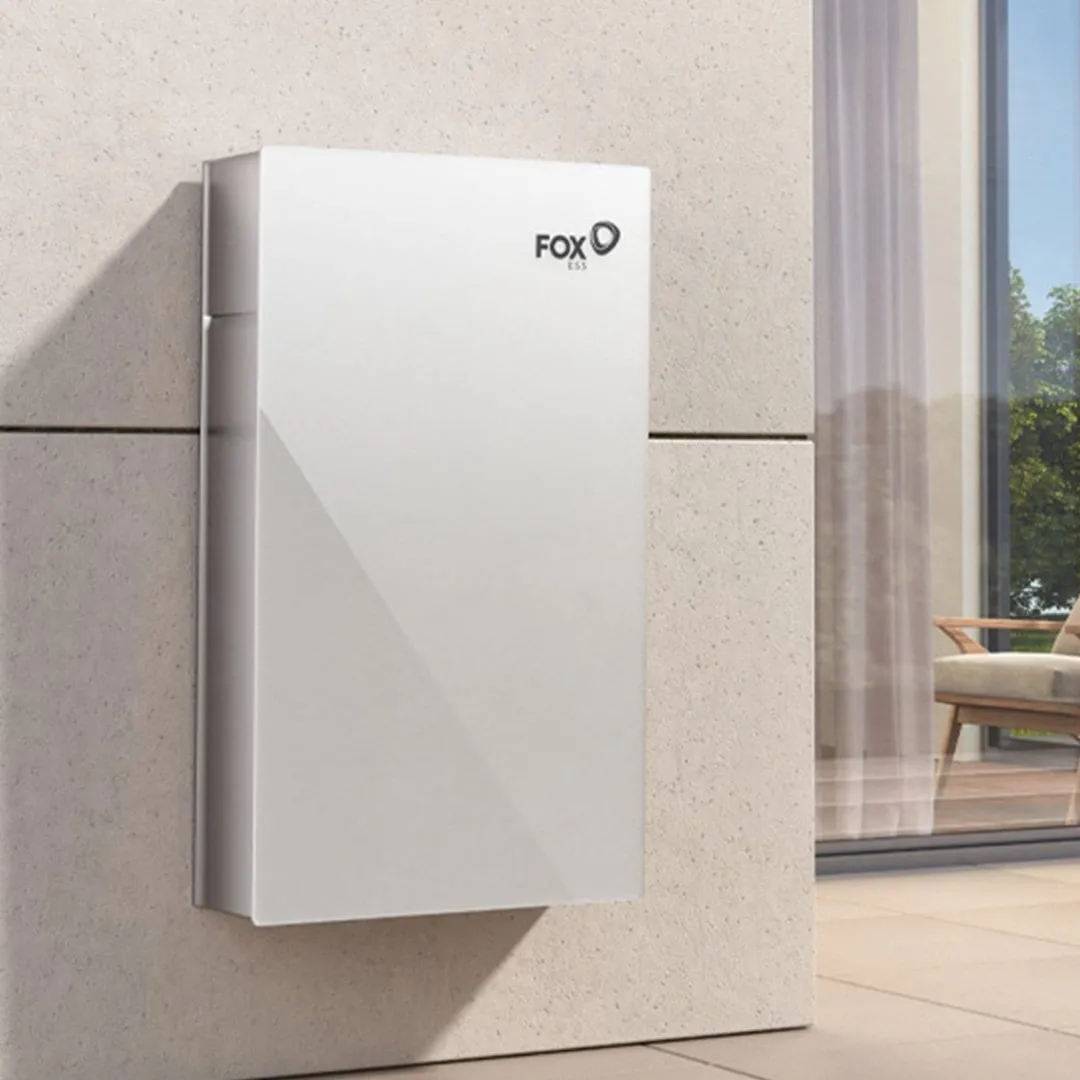
The economics of a UK solar installation business have quietly shifted. For years, the panels were the product and the battery was the optional extra a customer might add if the budget stretched. In 2026, for a growing share of installers, that relationship has inverted: the battery is where the margin lives, and the panels are increasingly the entry point that gets you through the door.
This isn’t a forecast. It’s what’s already showing up in install data, in the retrofit pipeline, and in the P&L of businesses that have restructured their sales process around storage attach rate rather than treating it as a bolt-on.
The attach-rate shift is the headline number
MCS logged 257,397 solar PV installations in 2025, up 32% year-on-year, taking cumulative UK deployment to roughly 21.6 GW — around 6.4% of the country’s electricity supply. That’s the installer trade’s top-line growth story, and it’s genuinely strong. But the number that matters more to margin is the proportion of those jobs that left with a battery attached.
Battery attach rates on new-build solar installs have been climbing steadily as combined solar-plus-storage quotes have become the default proposal rather than the upsell. Three forces are pushing this:
- Export rates have flattened out. Smart Export Guarantee tariffs vary by supplier — the best currently sit somewhere in the 12-20p/kWh range — but plenty of default tariffs pay a fraction of that. Compare that to grid import at roughly 25p/kWh under the Ofgem price cap, and the arithmetic for storing your own generation rather than exporting it cheaply is obvious to anyone who runs the numbers with a customer at the kitchen table.
- 0% VAT has held the whole category price-competitive. The 0% VAT rate on residential solar and battery storage in Great Britain runs until 31 March 2027, after which it’s scheduled to revert to 5%. That’s created a real, dated incentive window that a good sales process should be using now, not next year.
- Standalone battery retrofits are becoming a category of their own. A rising share of enquiries aren’t “solar plus battery” — they’re battery-only, on a roof that already has PV installed from five or ten years ago under the old Feed-in Tariff. That’s a customer base with zero acquisition cost if you already installed the panels.
The retrofit market is the opportunity most installers are under-serving
Here’s the gap: hundreds of thousands of UK homes installed solar between 2010 and 2019 under the FiT scheme, almost none of them with a battery, because domestic storage wasn’t commercially mature at the time. Those systems are now five to fifteen years into a 25-30+ year panel lifespan — the panels themselves are barely degraded (modern degradation curves run about 0.4% a year, and even older panels from that era are usually still performing well within spec) — but the household is exporting the majority of what it generates for very little return.
That’s a battery-shaped hole in the market that doesn’t require a single new roof. It requires:
- A list of your own historic install addresses (if you were trading pre-2019, you already have this)
- A retrofit-specific quote template that doesn’t assume a fresh PV install
- A conversation about DNO approval and consumer unit compatibility, which is usually the only genuinely technical barrier
- A hybrid or AC-coupled inverter/battery combination that works with an existing string inverter rather than requiring a full re-wire
The margin on a retrofit battery job is generally better than a bundled solar-plus-battery quote, because there’s no roof-work, no scaffolding cost shared across two trades, and the customer has already self-selected as solar-favourable. Installers who’ve built a systematic retrofit outreach — rather than waiting for the phone to ring — are seeing it become one of the highest-margin lines in the business.
For installers not sure where to start, Yorkshire-based YEERS has built its solar, battery, heat pump and EV proposition around exactly this kind of layered retrofit thinking, and it’s a useful reference point for how the messaging can be structured without over-promising.
What a battery job actually costs to install, and where the margin sits
Installed pricing for 2026 sits roughly here:
| System | Typical installed cost |
|---|---|
| 3kW solar-only | ~£5,000 |
| 4kW solar-only | £6,000-£8,000 |
| 10kW solar-only | £13,000-£17,000 |
| Home battery (generic) | £4,000-£8,000 (~£400-£700/kWh) |
| Tesla Powerwall 3 (13.5kWh) | £8,500-£10,500 |
| Commercial solar | £900-£1,200/kWp |
The battery line is where the labour-to-hardware ratio favours the installer more than solar does. A battery retrofit is typically a one-day job for an experienced two-person team once the survey and DNO paperwork are done, with hardware cost as a larger fraction of the invoice than panel cost is on a roof job — but the margin per labour-hour is usually stronger, because there’s no scaffolding, no roof access risk, and far less weather dependency scheduling around it.
The upsell sequencing that tends to work best isn’t “solar now, battery maybe later” pitched as an afterthought. It’s presenting the battery as the thing that makes the export-rate arithmetic actually work in the customer’s favour, at quote stage, with real numbers rather than a generic percentage. Installers who show a customer their actual expected self-consumption uplift — using a realistic UK yield assumption of around 850 kWh per kWp per year (rising to 1,050+ in the sunniest parts of the south) — close batteries at a materially higher rate than those who present it as a flat add-on cost.
FLD Electrical in Swansea and ElectriFusion Solutions in Doncaster are both good examples of installers whose customer-facing content leads with the combined economics rather than treating storage as a separate SKU — worth a look if you’re rebuilding your own quote presentation.
Commercial and C&I storage is the second wave
While the domestic retrofit opportunity is the most immediately actionable for smaller installer businesses, commercial battery storage is where the volume is heading next. Businesses on half-hourly metering with demand charges, or sites running generators/backup as a resilience requirement, are increasingly asking for storage alongside — or instead of — new PV.
This is a genuinely different sales conversation: it’s about peak shaving, demand charge avoidance and resilience rather than export-rate arbitrage, and it usually needs a finance conversation attached, since commercial battery capex is a different order of magnitude to a domestic system. Installers moving into this space are worth pointing at batterystorageforbusiness.co.uk for how the commercial storage pitch differs from the domestic one, and commercialsolarfinance.co.uk covers the funding routes — asset finance, PPAs, leasing — that make a five or six-figure commercial battery quote actually closeable rather than a number that scares the client off.
For installers building out a commercial arm from a domestic base, EC Eco Energy in Essex and D&R Energy in Bristol are both examples of businesses that have made that domestic-to-commercial transition without losing their residential pipeline — the two customer bases turn out to refer into each other more than people expect, particularly via business owners who had solar at home first.
MCS is not optional, and O&M is the retention play
Every SEG-eligible install needs MCS certification, full stop — it’s not a nice-to-have, it’s the gate. For an installer weighing whether to bring battery certification in-house or subcontract it, the honest answer is that if storage is going to be more than an occasional add-on, the certification investment pays for itself within the first handful of retrofit jobs, given the margin profile described above.
The other piece installers under-invest in is post-install servicing. String inverters typically last 10-15 years and cost £500-£1,000 to replace — a predictable, schedulable revenue line if you’re tracking your own install base and reaching out before failure rather than waiting for a panicked call. Battery systems have their own monitoring and firmware/warranty considerations that create a genuine reason to stay in touch with a customer for years after the original invoice is paid. Solar Maintenance Solutions operates purely in this O&M space nationally, and its existence as a standalone specialist is itself a signal: there’s now enough installed base in the UK to support a maintenance-only business model, which wasn’s true five years ago.
Where this fits in the wider 2026 picture
None of this happens in isolation from the wider grant and policy landscape installers need to get right when they’re quoting. It’s worth being precise with customers here, because the two most commonly confused schemes are:
- The Boiler Upgrade Scheme (£7,500) is for air source (or ground source) heat pumps — it does not apply to solar PV or battery storage, and quoting it against a battery job is a fast way to lose customer trust.
- Farm and agricultural solar in England sits under the Improving Farm Productivity grant, at roughly 25% of eligible cost — not the older, larger FETF figure that still circulates in some marketing copy. Installers working the agricultural sector should check current rates by UK nation before quoting, since Scotland, Wales and Northern Ireland run separate schemes.
For installers wanting the current UK-wide install and market numbers behind all of this, Solar Weekly’s own UK solar industry data page tracks the MCS figures through the year, and our installer marketing piece covers how to actually communicate attach-rate economics to a homeowner without drowning them in kWh figures. On the pure pricing side, thecostofsolar.co.uk’s battery storage cost breakdown is a solid page to link customers to directly when they want to sanity-check a quote against the wider market.
The practical takeaway
If your business is still pitching batteries as an optional line item at the bottom of a solar quote, you’re leaving margin on the table twice over: once on the attach rate of new installs, and again on the much larger retrofit base of pre-2019 solar homes who were never offered storage at all. The installers pulling ahead in 2026 have built a retrofit list, a commercial storage conversation, and an O&M relationship into the business model — not just a panel install service with a battery available on request.